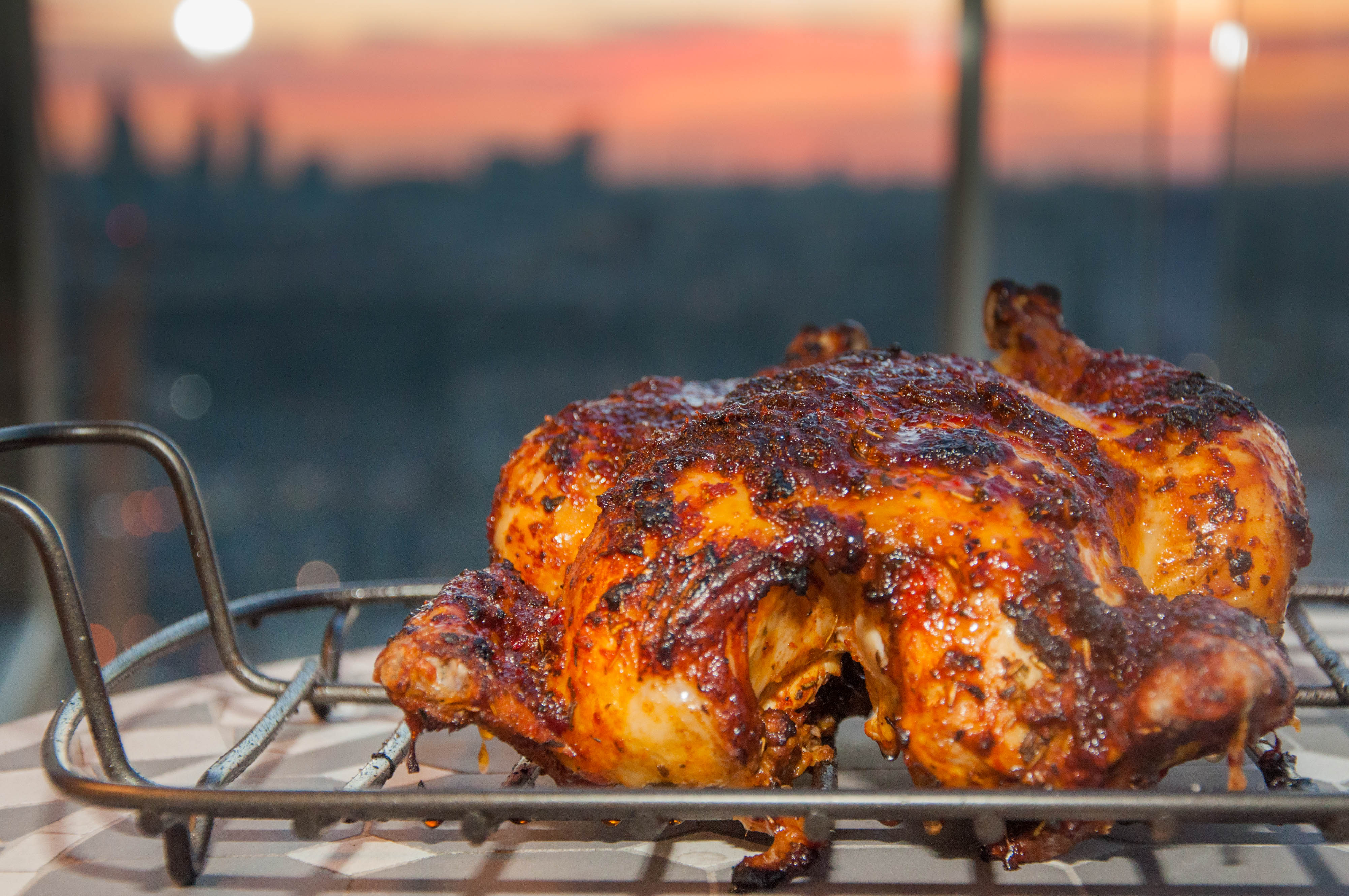
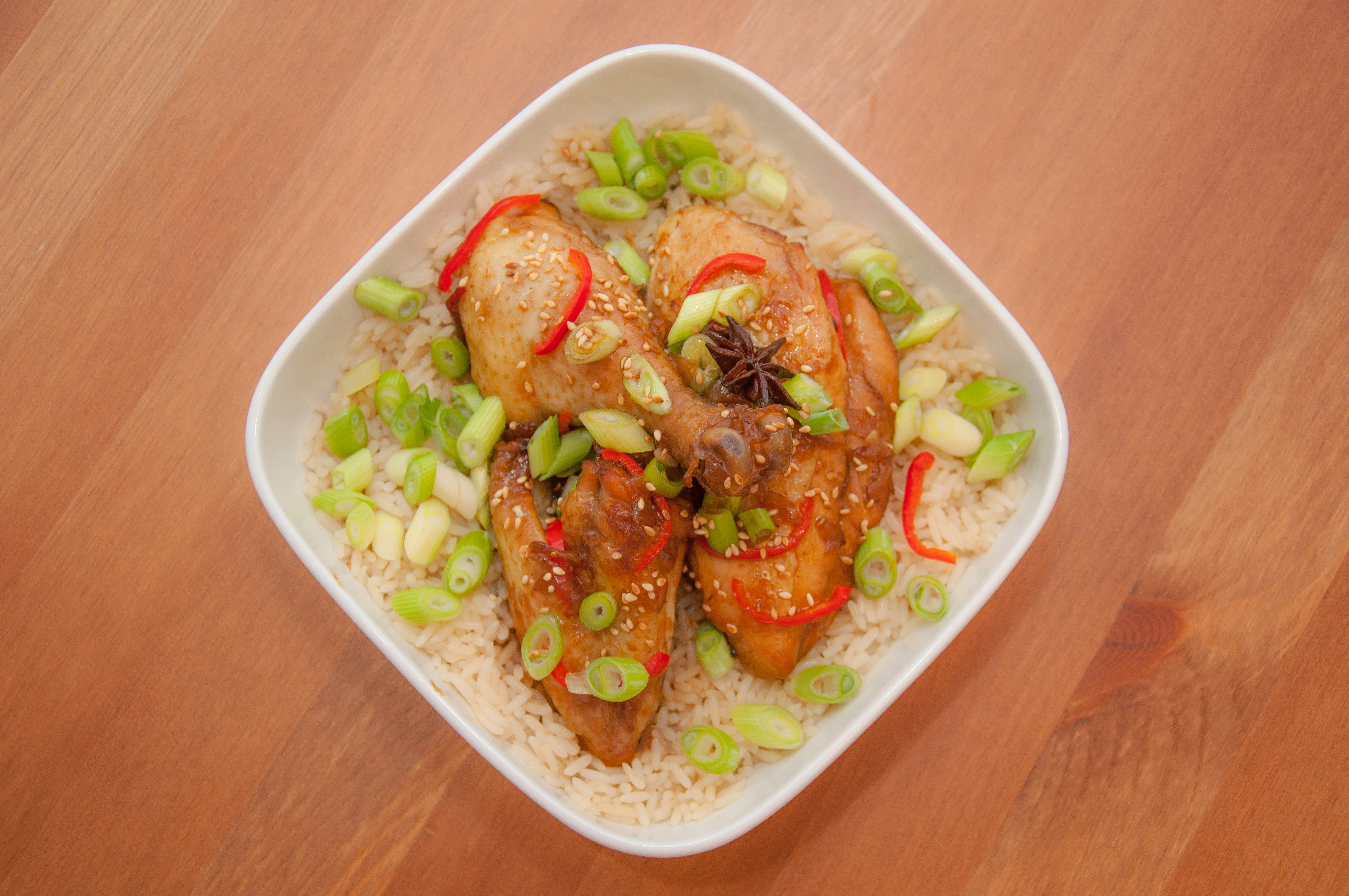
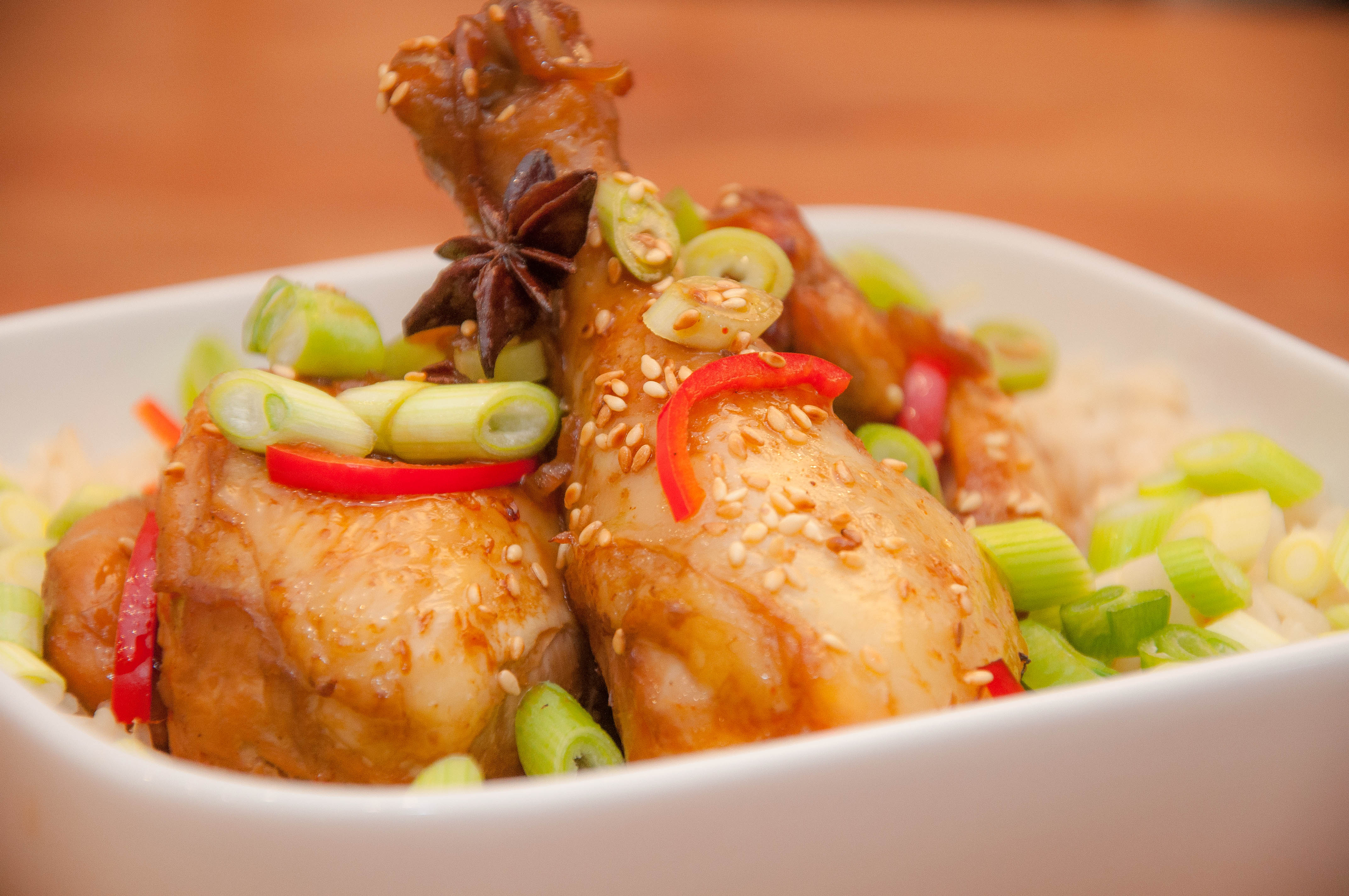
TWICE COOKED, TWICE FLAVOUR, CHINESE CHICKEN WITH CHILLI AND SPRING ONION

DSC_0824DSC_0833

RECIPE_INFO1_0007

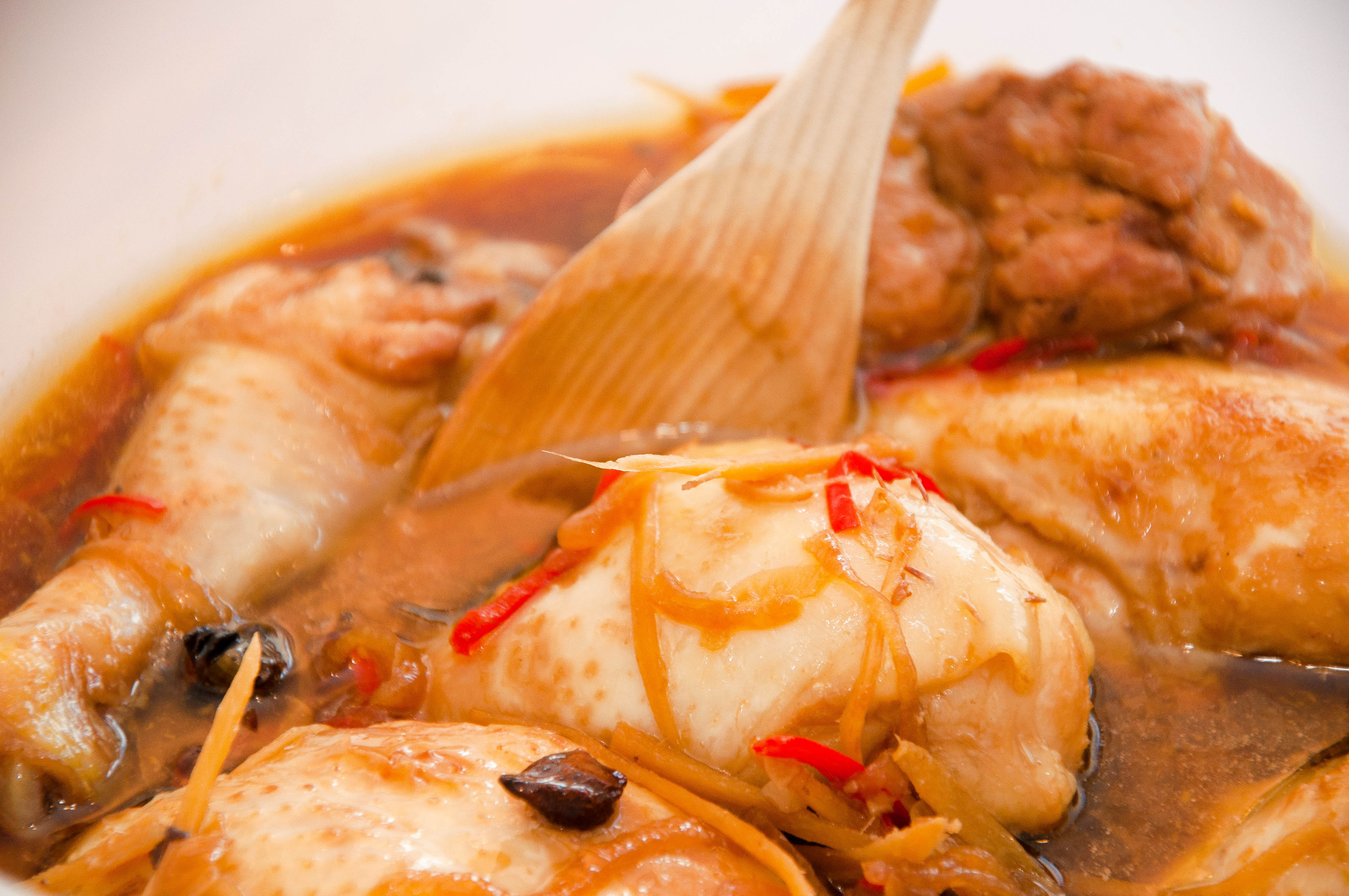
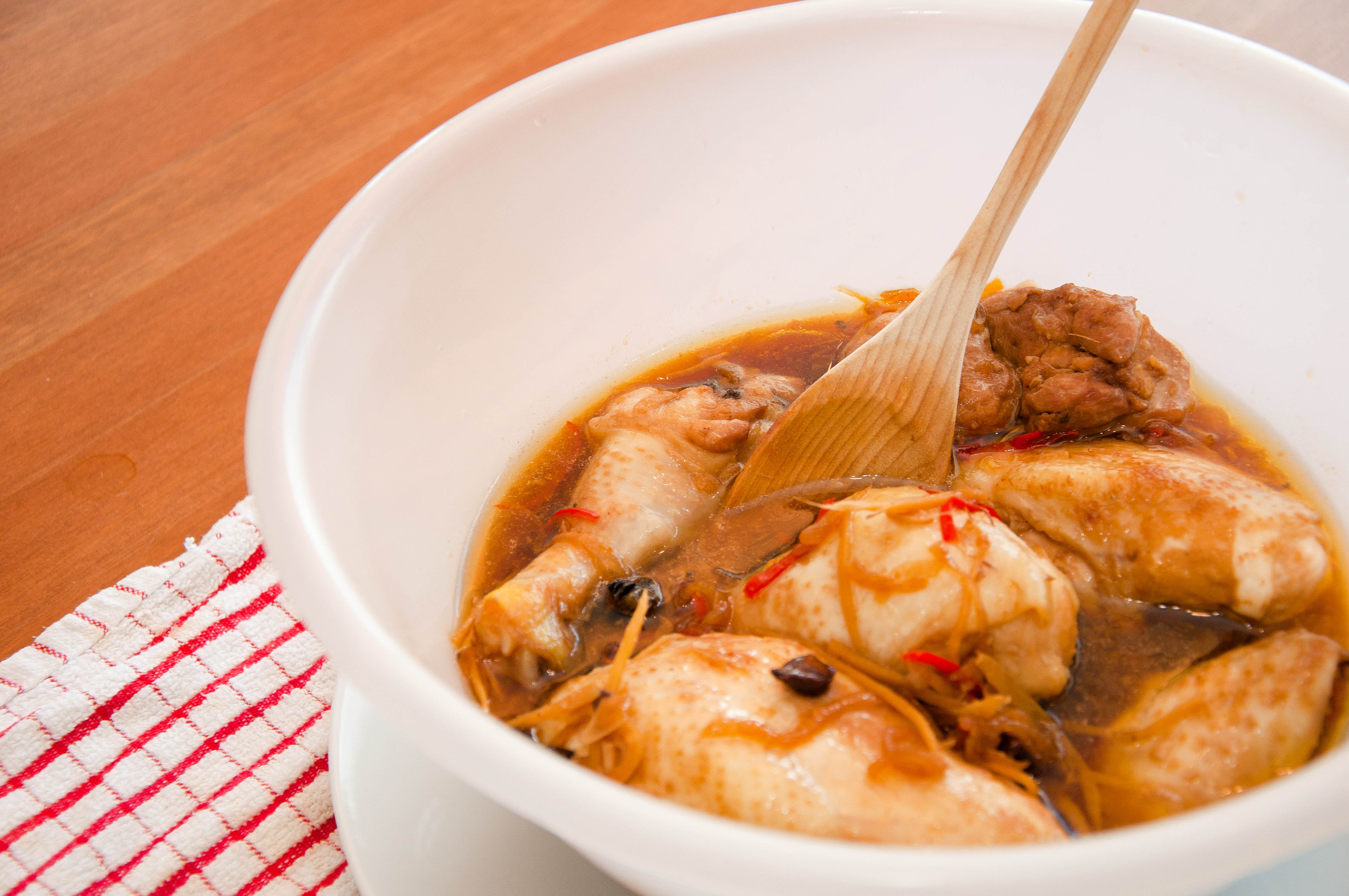
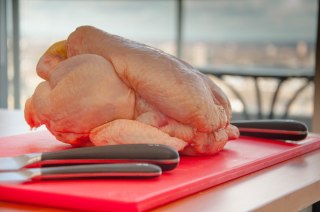
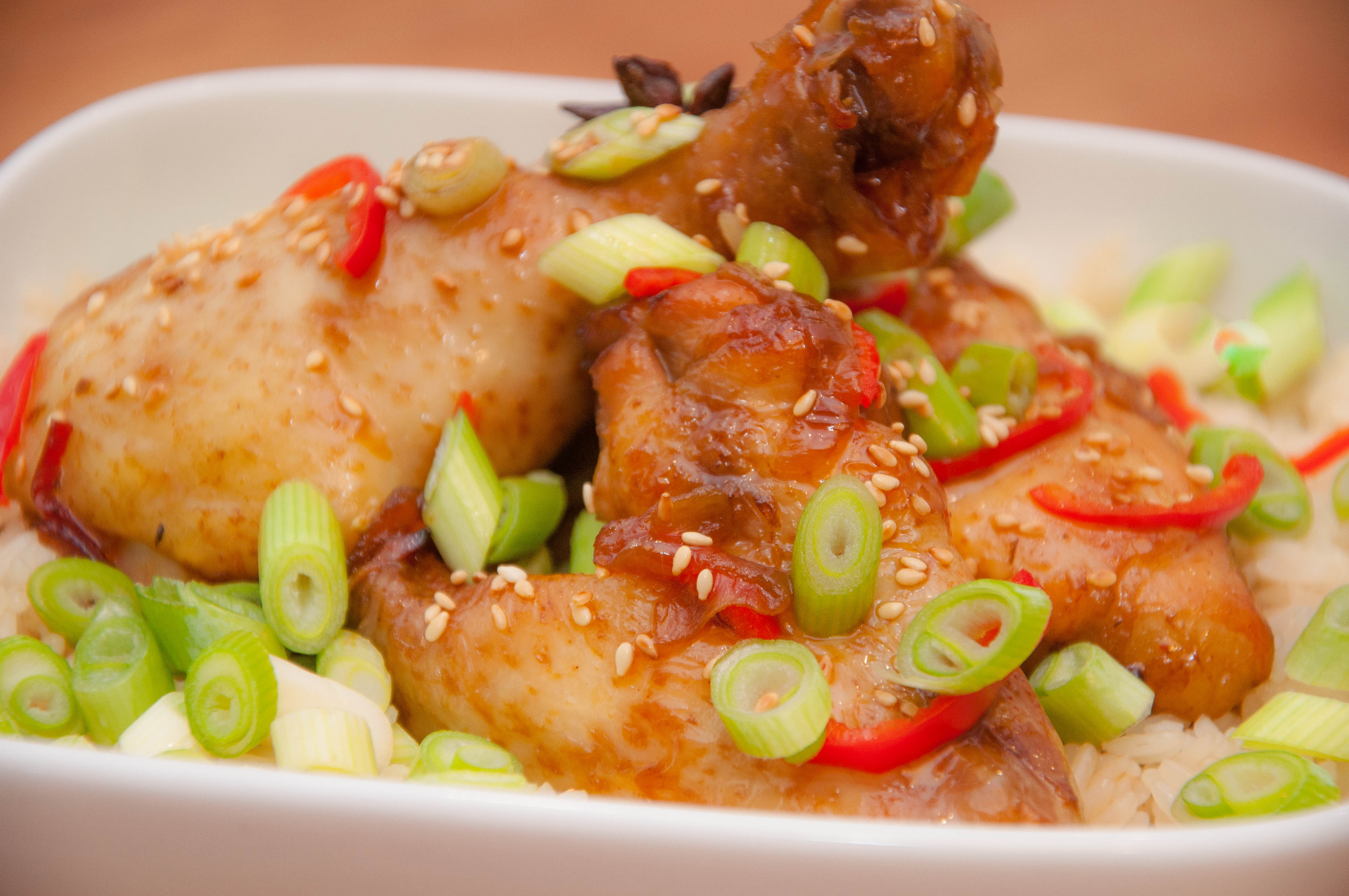
This bright, colourful, simple Chicken dish has been passed down through my mum’s family. The distinctly asian flavours and aromas are deep, and strong but quite fresh. The dish is simplicity itself to put together and cook. Julienning the ginger and vegetables beforehand will make things easier for you. If you have the time, the only difficult decision you have is whether to take a break from the cooking after the Chicken has braised in the first section of prep and let it marinade for a few hours… though obviously this turns a dish that is quite quick to cook into an all day affair (though you can obviously just leave the chicken marinating and go and do your own thing). Twice cooking the chicken is an important process for the flavours and textures – the first slow braising step imparts rich colour and flavour to the chicken as well as making the flesh succulent and tender. Roasting the chicken after this and basting it gives the chicken an indulgent crispy sticky covering that holds a real flavour punch. Served with fresh tangy spring onions ,spicy chillies and simple boiled rice this dish springs off the plate and into your mouth with a awesome medley of complimenting tastes and textures –
DSC_0816

INGREDIENTS

For the chicken:

  • Small whole chicken
  • Cup of Water
  • Cup of chicken stock
  • 3 small yellow onions
  • 4 spring onions
  • 5 garlic cloves, peeled, bruised
  • 6cm piece fresh ginger
  • 3 star anise
  • 4 tbsp sugar
  • 2 tbsp oyster sauce
  • 1/2 cup Chinese rice wine
  • 6 tbsp Light soya
  • 4 tbsp Dark soya sauce
  • 2 long red chilli, thinly sliced
  • heaped tbsp sesame seeds
  • Steamed jasmine rice to serve

For the marinade:

  • 1 tablespoons oyster sauce
  • 1 tablespoon honey
  • 1/2 teaspoon Chinese five spice
  • 1 teaspoon light soy sauce
  • 1/2 teaspoon dried chilli flakes
  • 1/4 teaspoon Chang’s sesame oil

For basting:

  • 500ml of Chicken stock.

DSC_0806

Preparation Method:

  1. Wash chicken and pat dry skin and body cavity with kitchen paper towel. OR leave to air dry for about 30-40 mins.
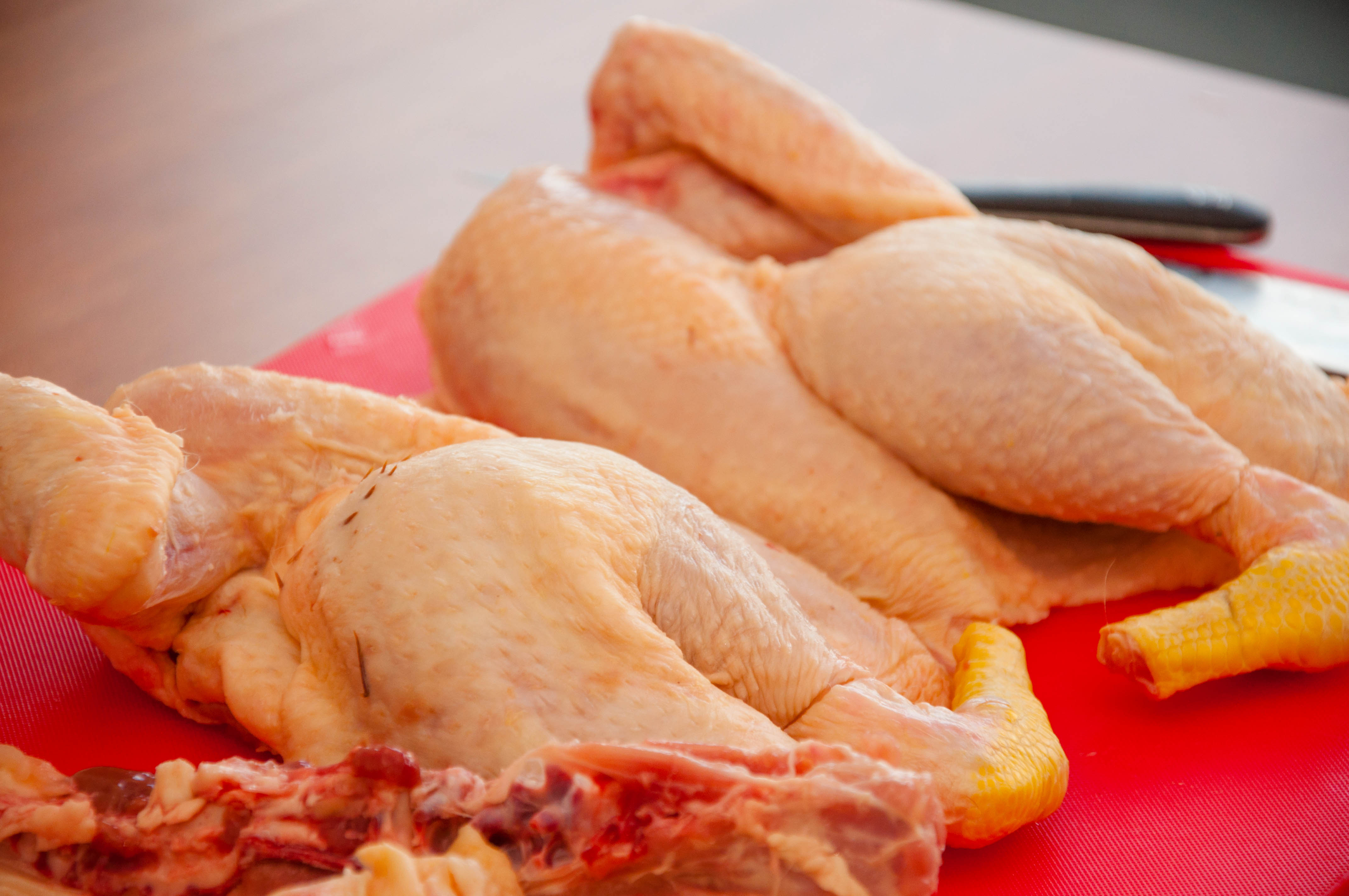
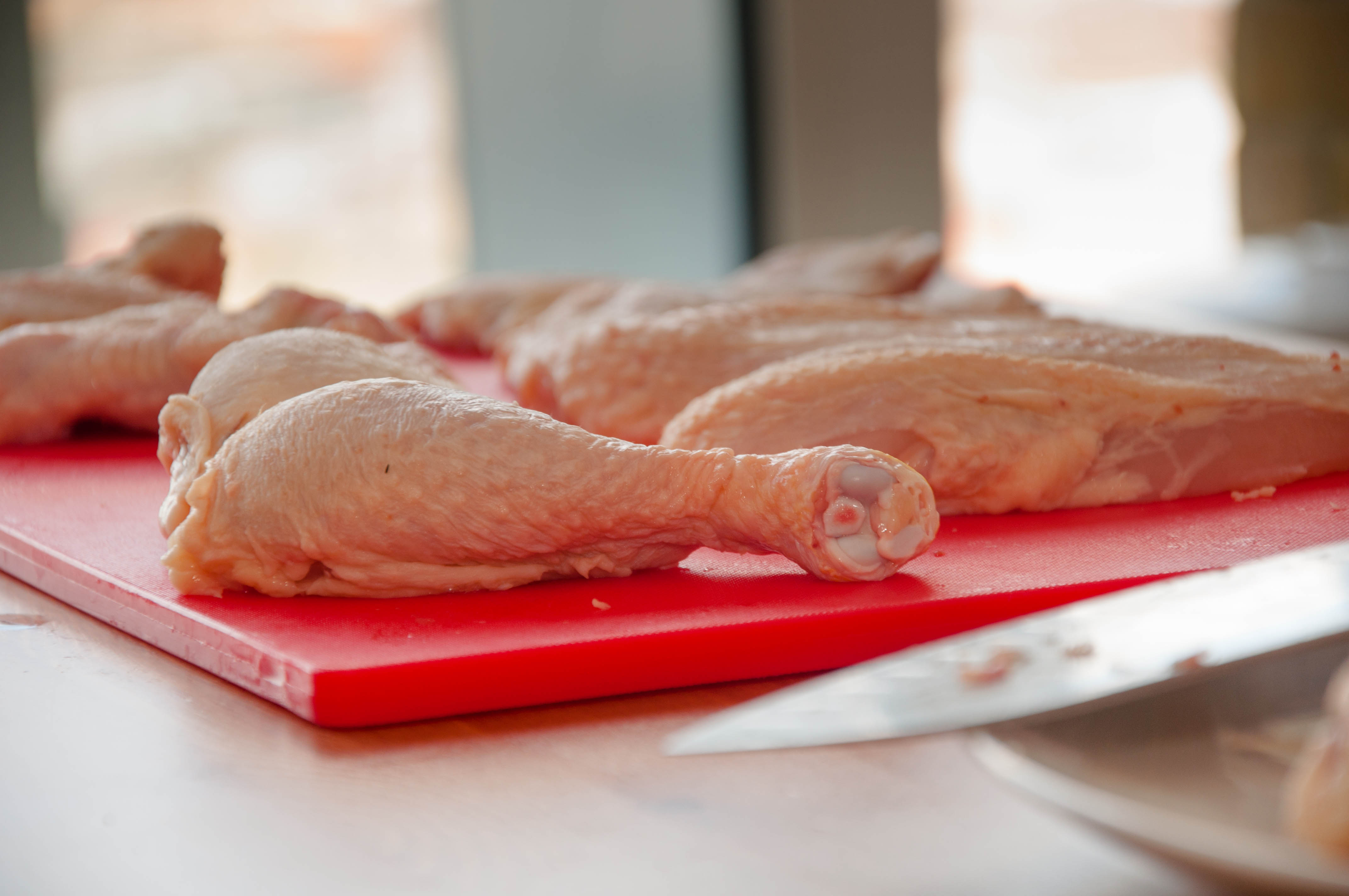
  2. Butcher the Chicken into its disassembled pieces – breast, wings and legs and thighs.
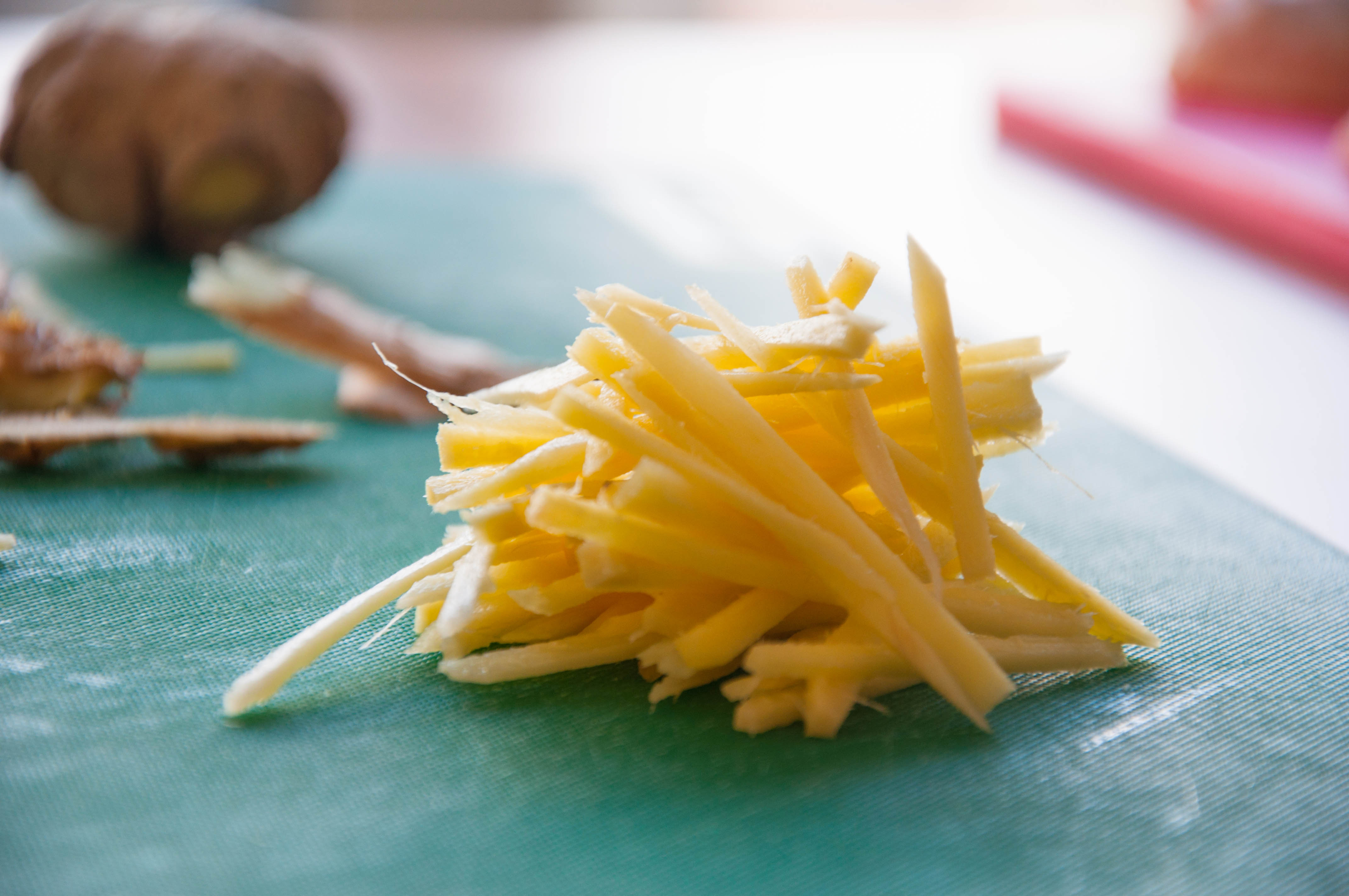
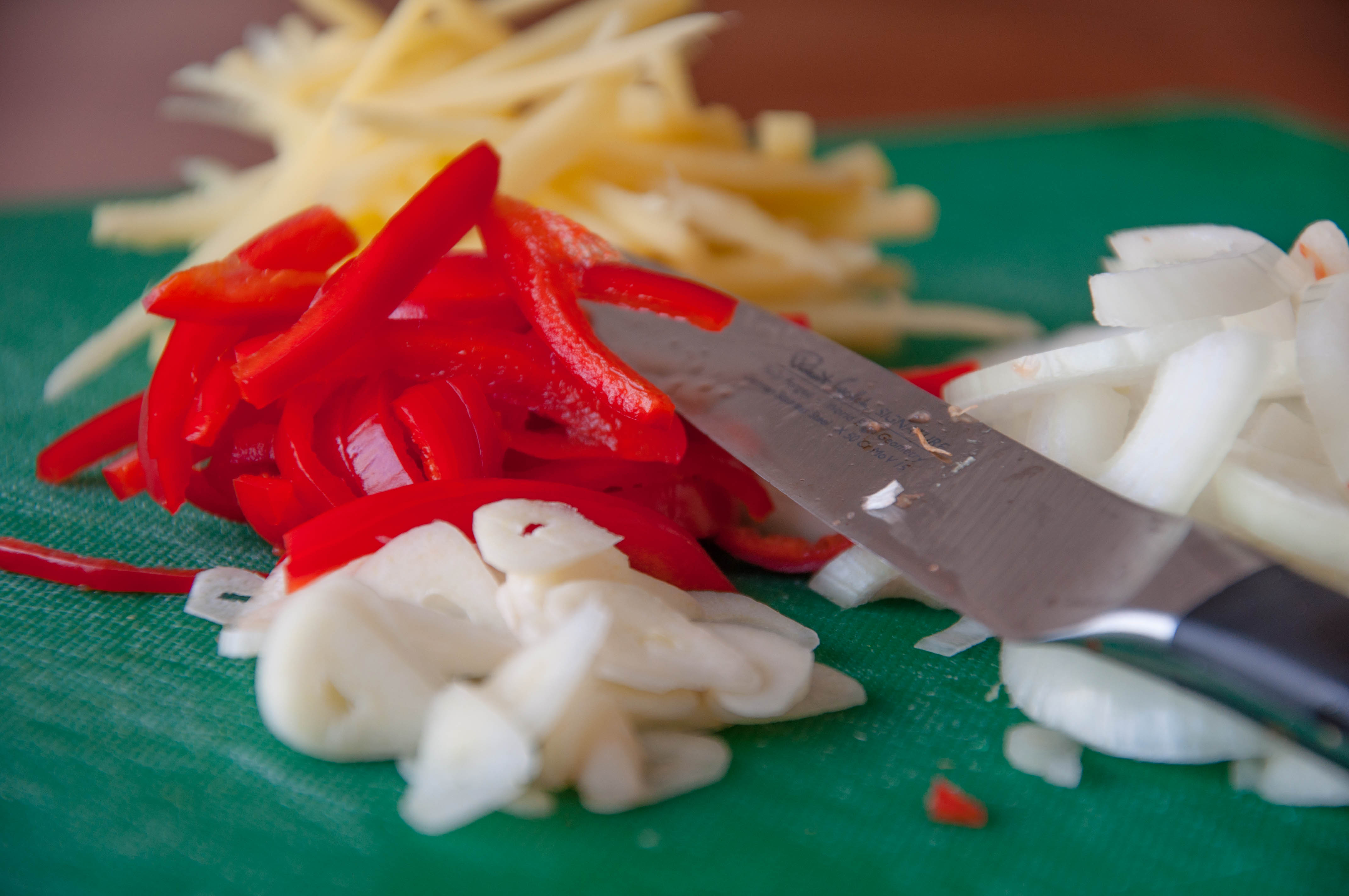
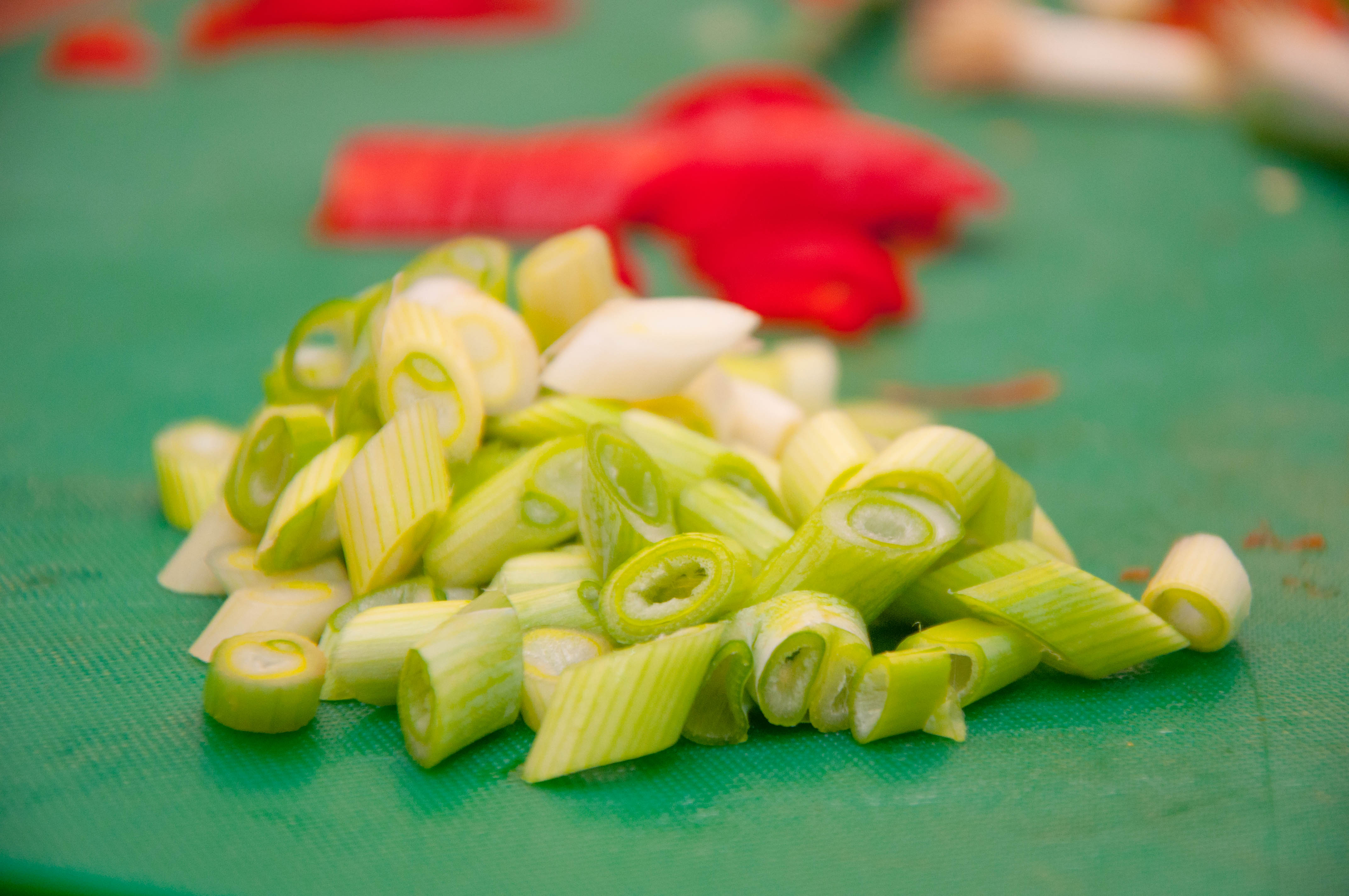
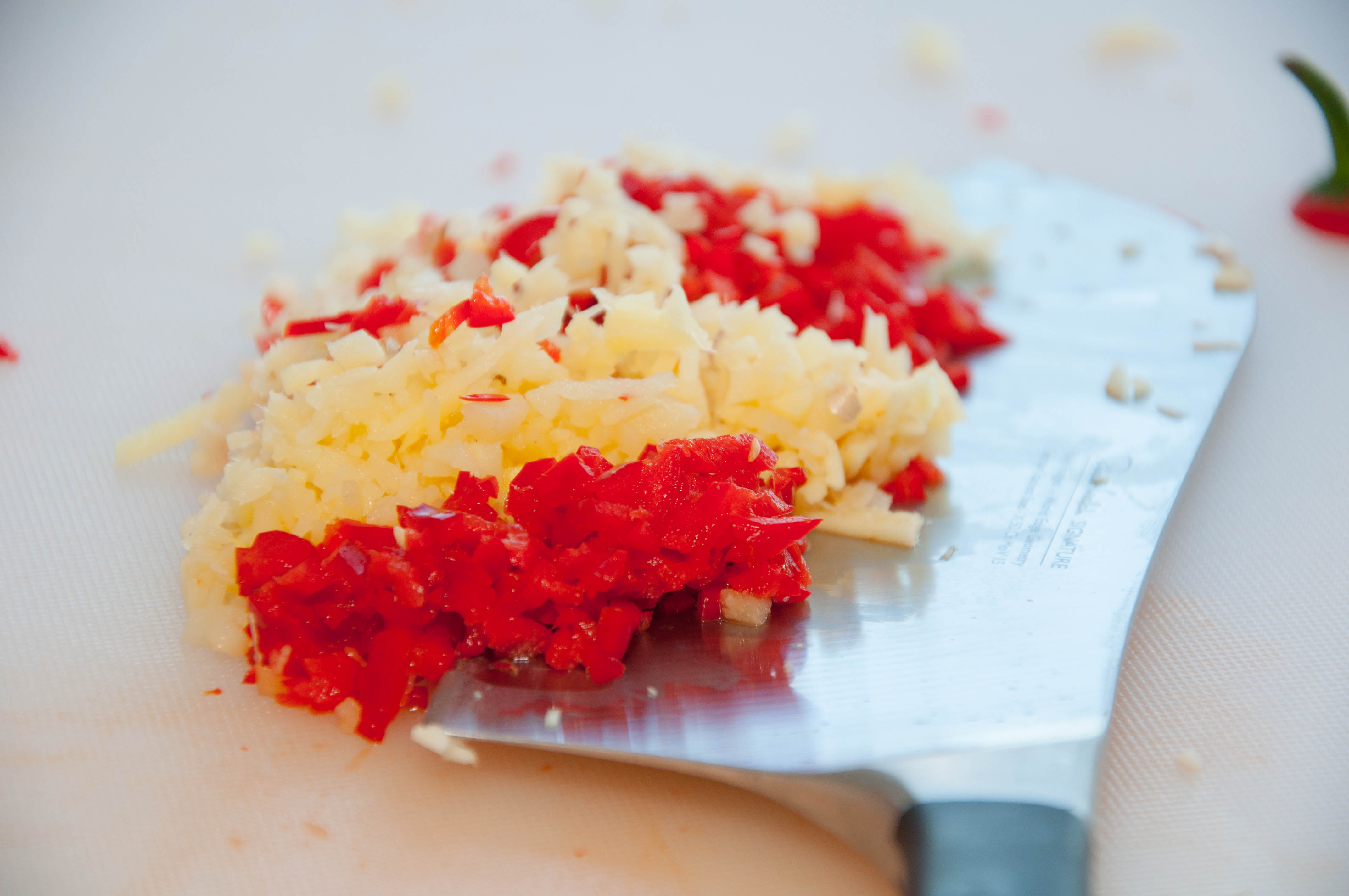
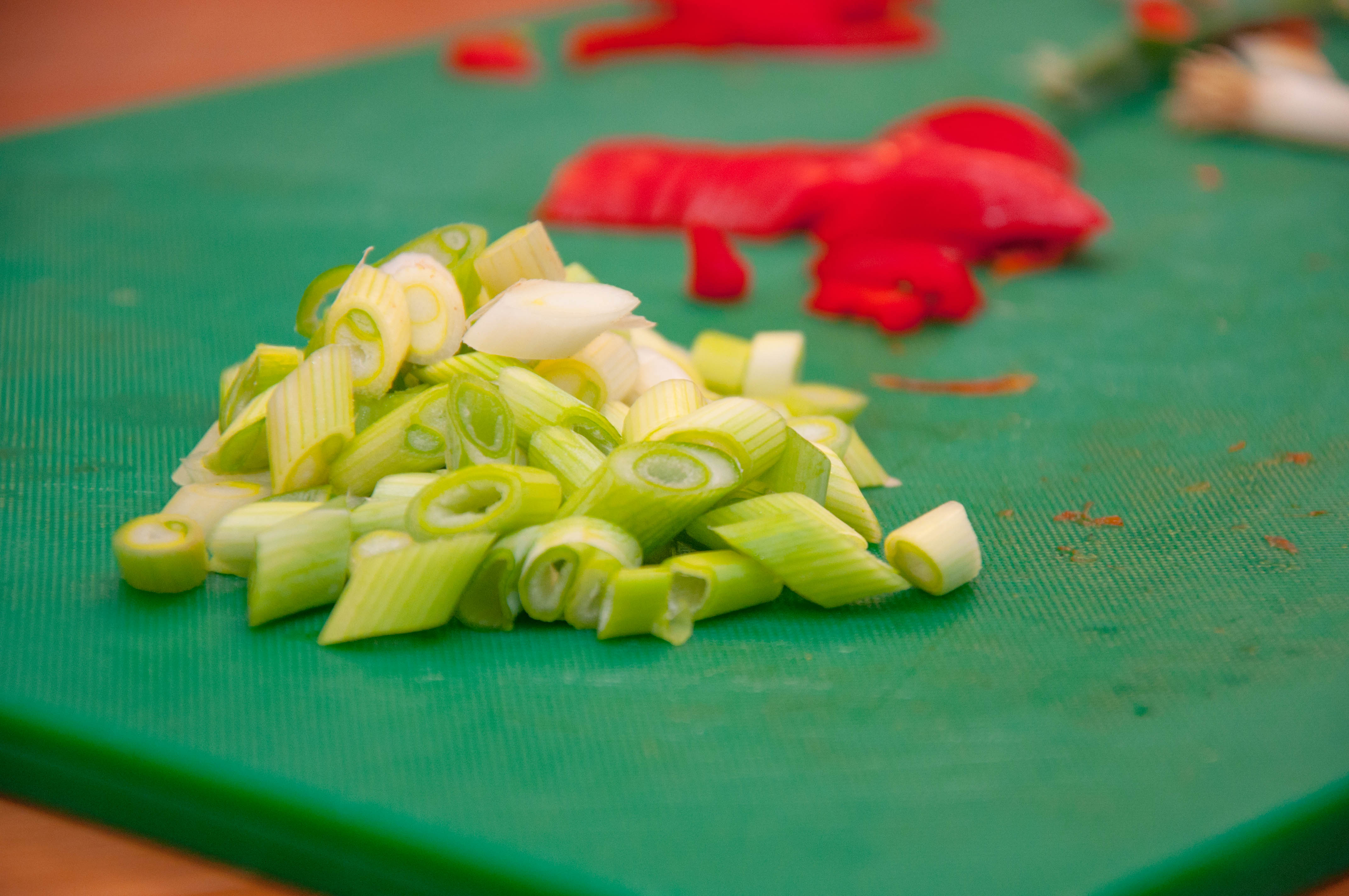
  3. Slice the ginger and onion into thin strips around 5-6 cm long.
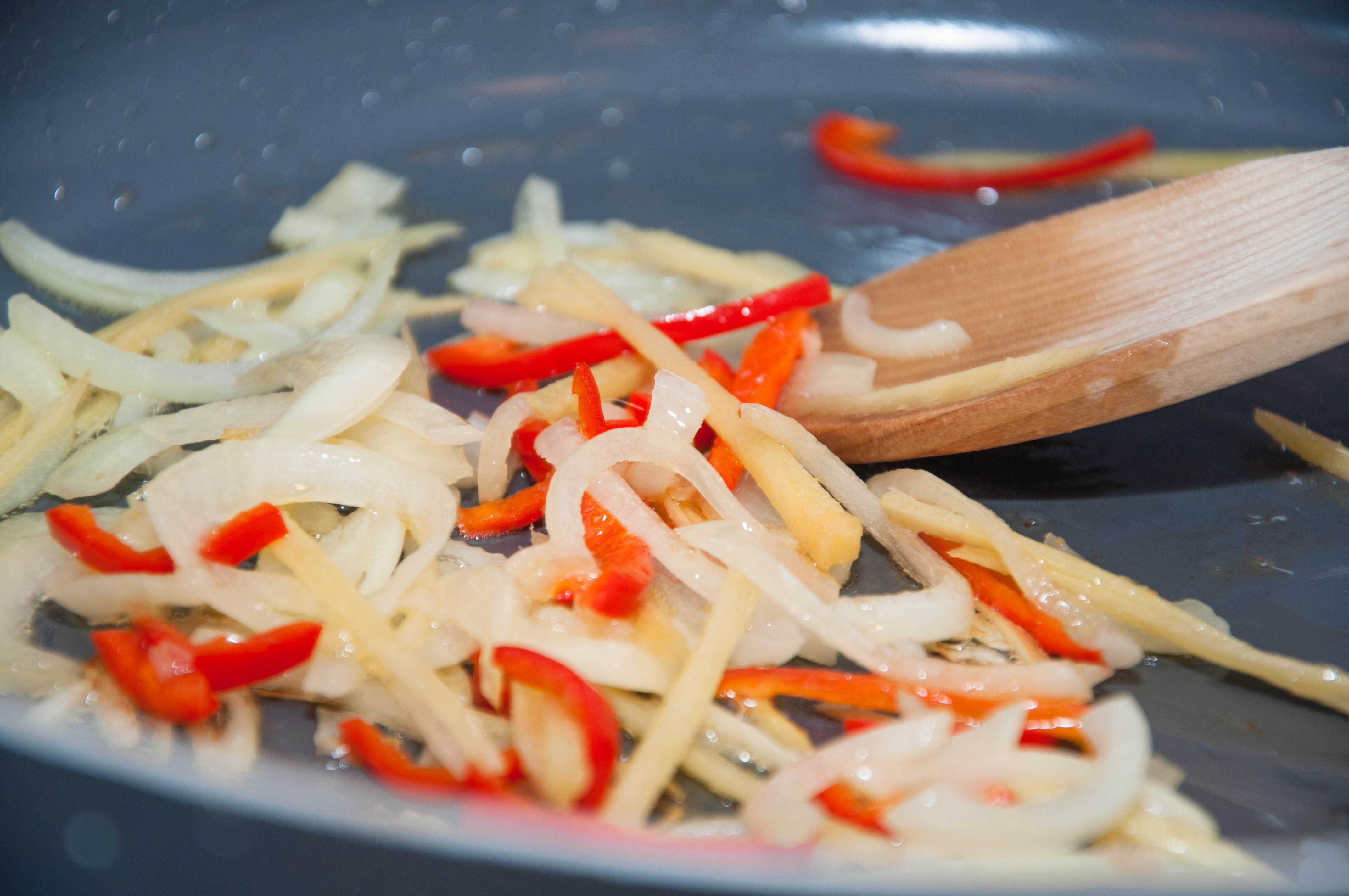
  4. Heat oil in a pan and fry the ginger and yellow onion until starting to colour. Add half the sliced chilli and fry for around a minute.
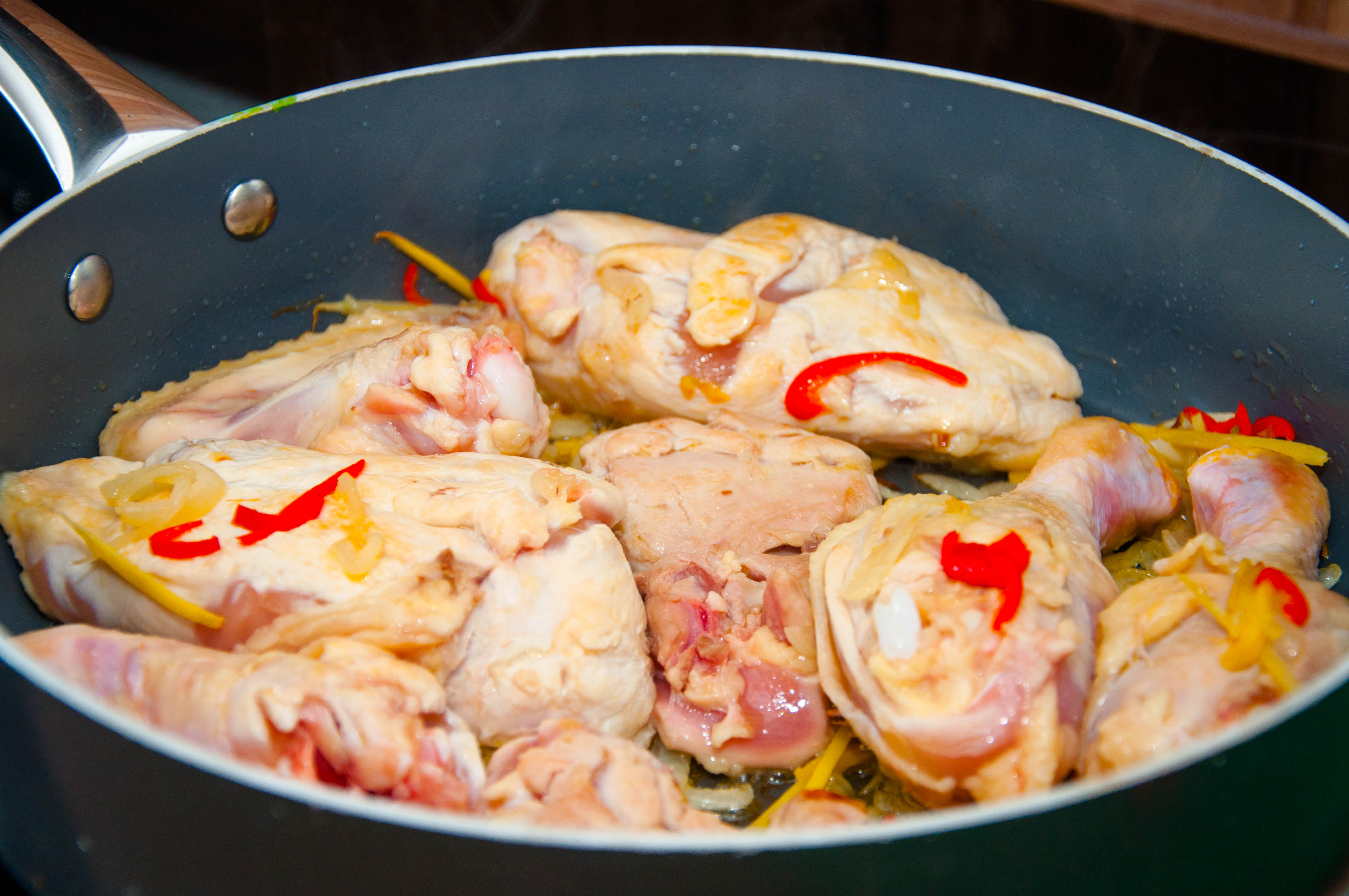
  5. Place garlic + chicken pieces in pan in a single layer. Brown on one side, then turn over all the pieces and brown the other side.
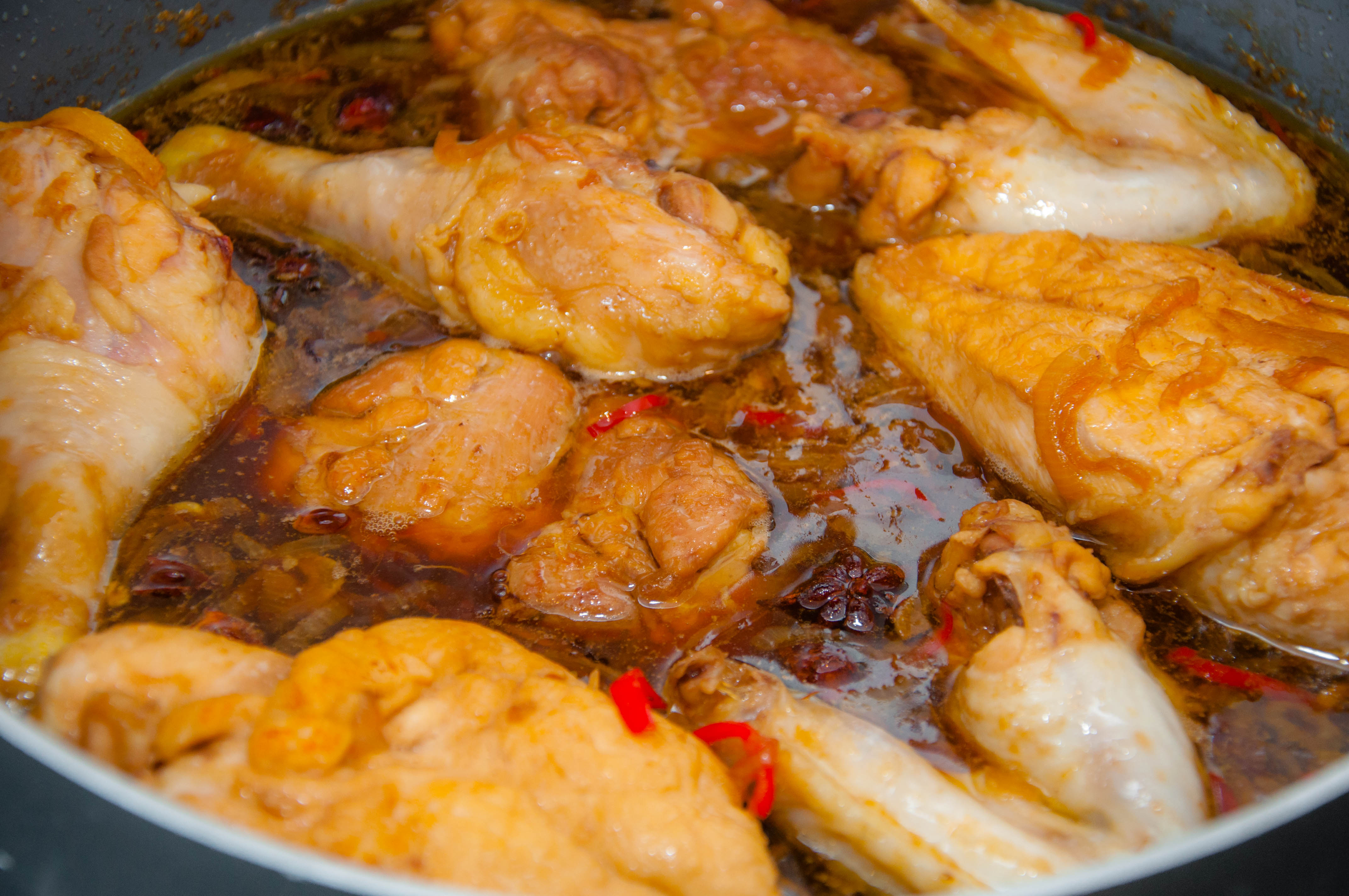
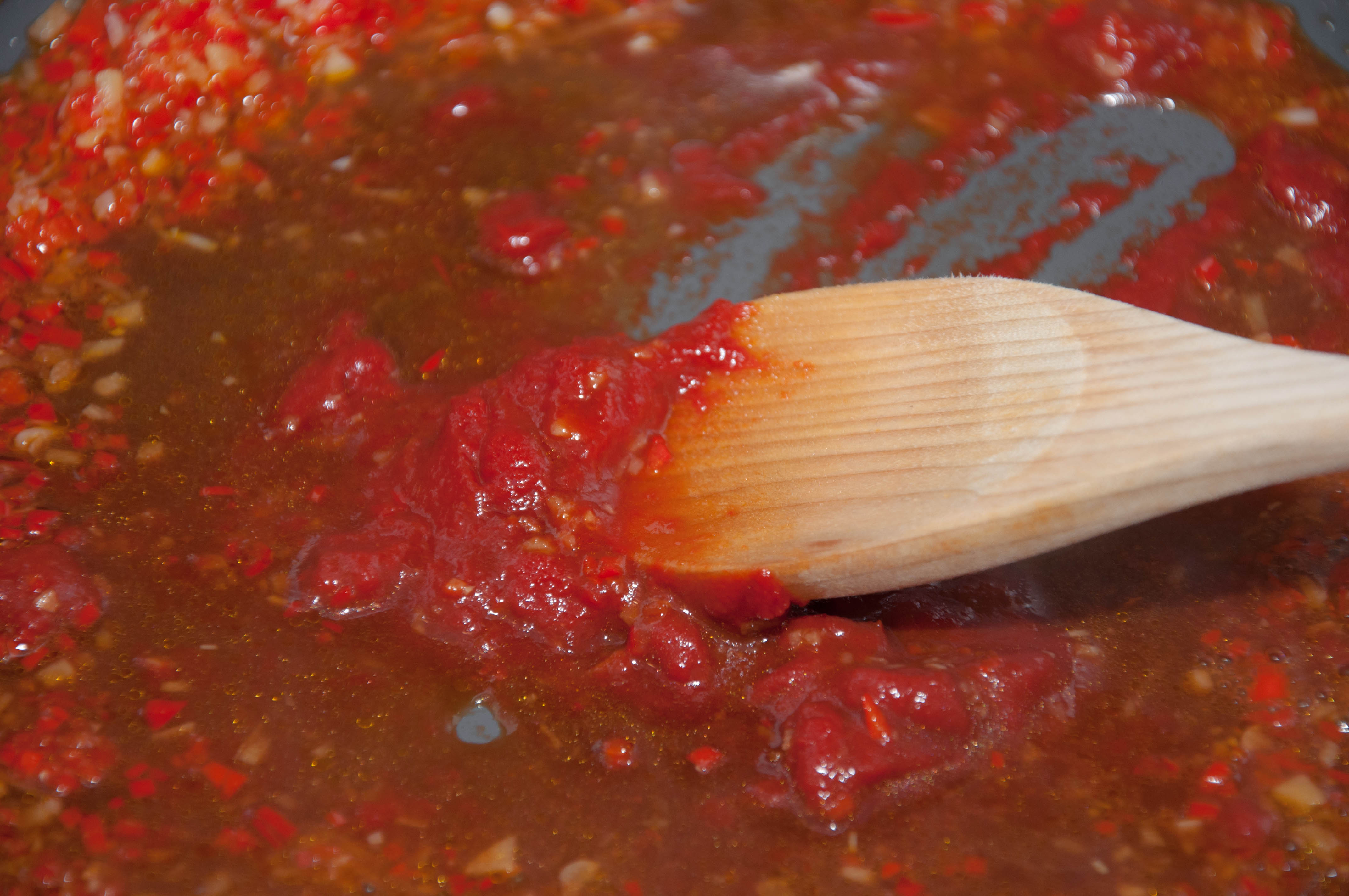
  6. Sprinkle rice wine onto chicken and add stock and water into wok with chicken. Then add soya sauce (light and dark), oyster sauce, star anise and the sugar.
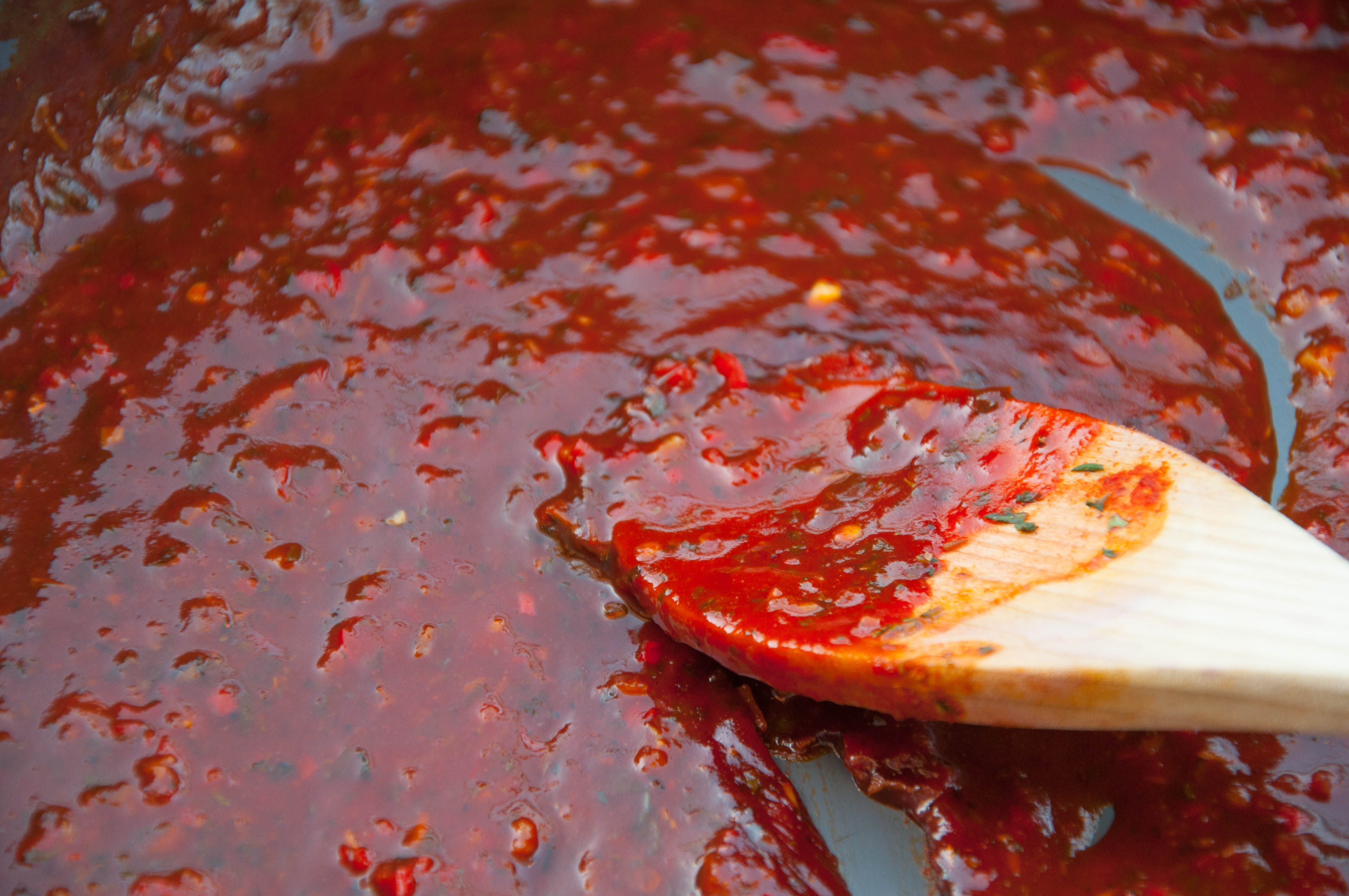
  7. Turn heat to medium-low then cover wok and braise chicken until cooked; turning frequently to avoid burning skin. When the liquid in the wok becomes thicker then leave uncovered and continues to cook on low heat and spooning the liquid onto chicken to colour the skin. This gives the chicken a lovely brown colour on the skin and cook the meat in a way which is succulent and tender. It takes appox. 35 mins. to cook the chicken.
  8. At this stage – if you want you can let the dish cool and place into the fridge with all the pan juices for 4hrs (or even up to 12hrs.) – Though it will add flavour to the dish,  its not really necessary.
  9. Transfer to a roasting pan, skin side up. Pat dry with paper towel.
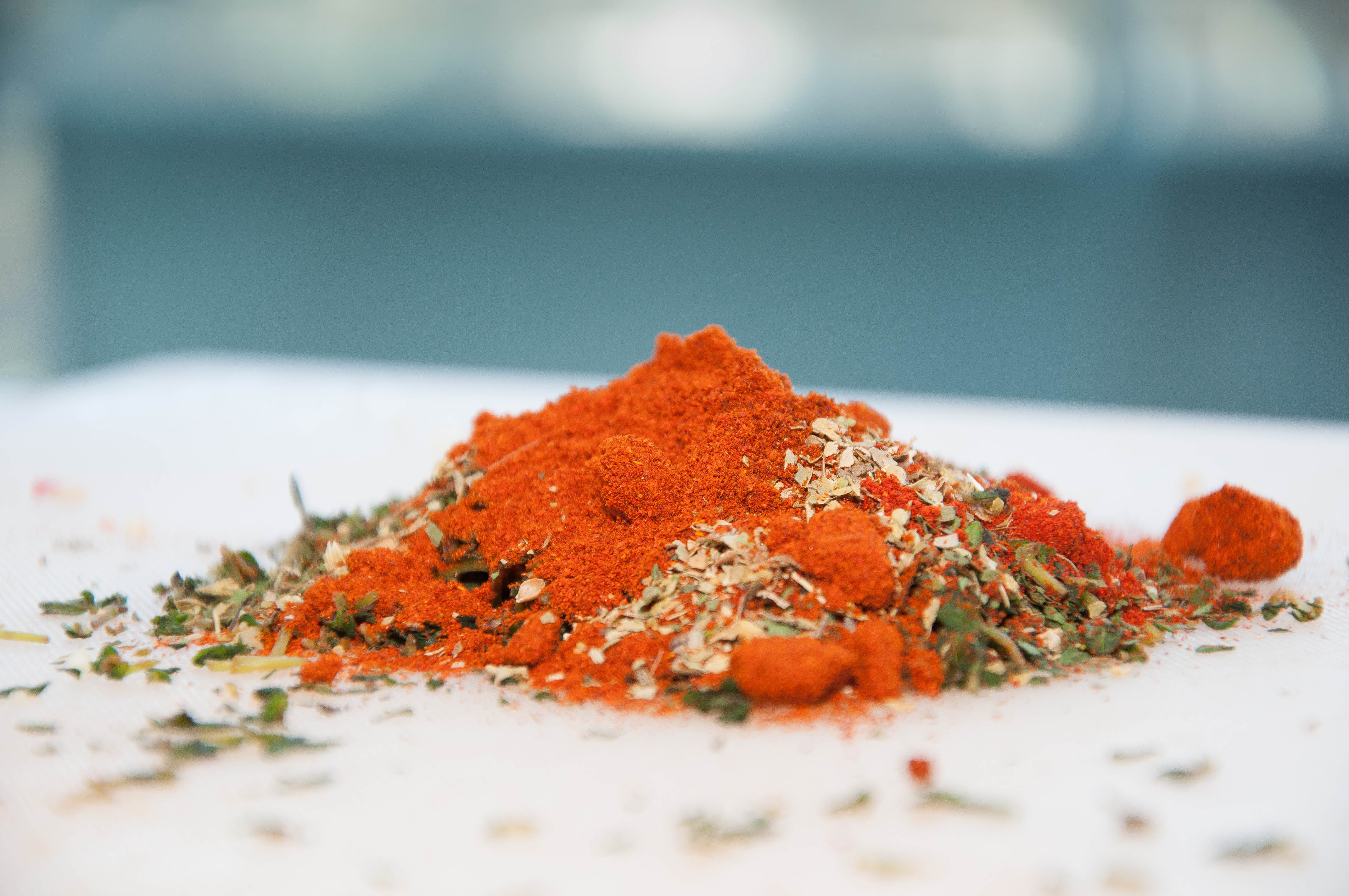
  10. Meanwhile, make marinade Combine hoisin sauce, honey, five spice, soy sauce, chilli and sesame oil in a bowl. Reserve 1 tablespoon mixture.
  11. Roast for 10 minutes or until browned. Remove from oven. Rotate chicken. Brush chicken with remaining marinade. Cook for 10 minutes or until chicken is cooked through and dark brown. Baste throughout with chicken stock and any leftover marinade.
  12. Meanwhile toast some sesame seeds in a pan.
  13. Transfer the chicken to a plate. Cover with foil. Set aside to rest for 10 minutes.
  14. Thinly slice remaining spring onion. Place individual portion of chicken on a plate, sprinkle a pinch of toasted sesame seeds on top. Garnish chicken with spring onion and chilli.
  15. Serve with rice and drizzle over some of the pan juices.

MUSIC I COOKED TO:
DSC_0695DSC_0699DSC_0702DSC_0704DSC_0705DSC_0707DSC_0717DSC_0719DSC_0732DSC_0742DSC_0746DSC_0749DSC_0753DSC_0757DSC_0765DSC_0784DSC_0786DSC_0799DSC_0800DSC_0805DSC_0806DSC_0823DSC_0841DSC_0846

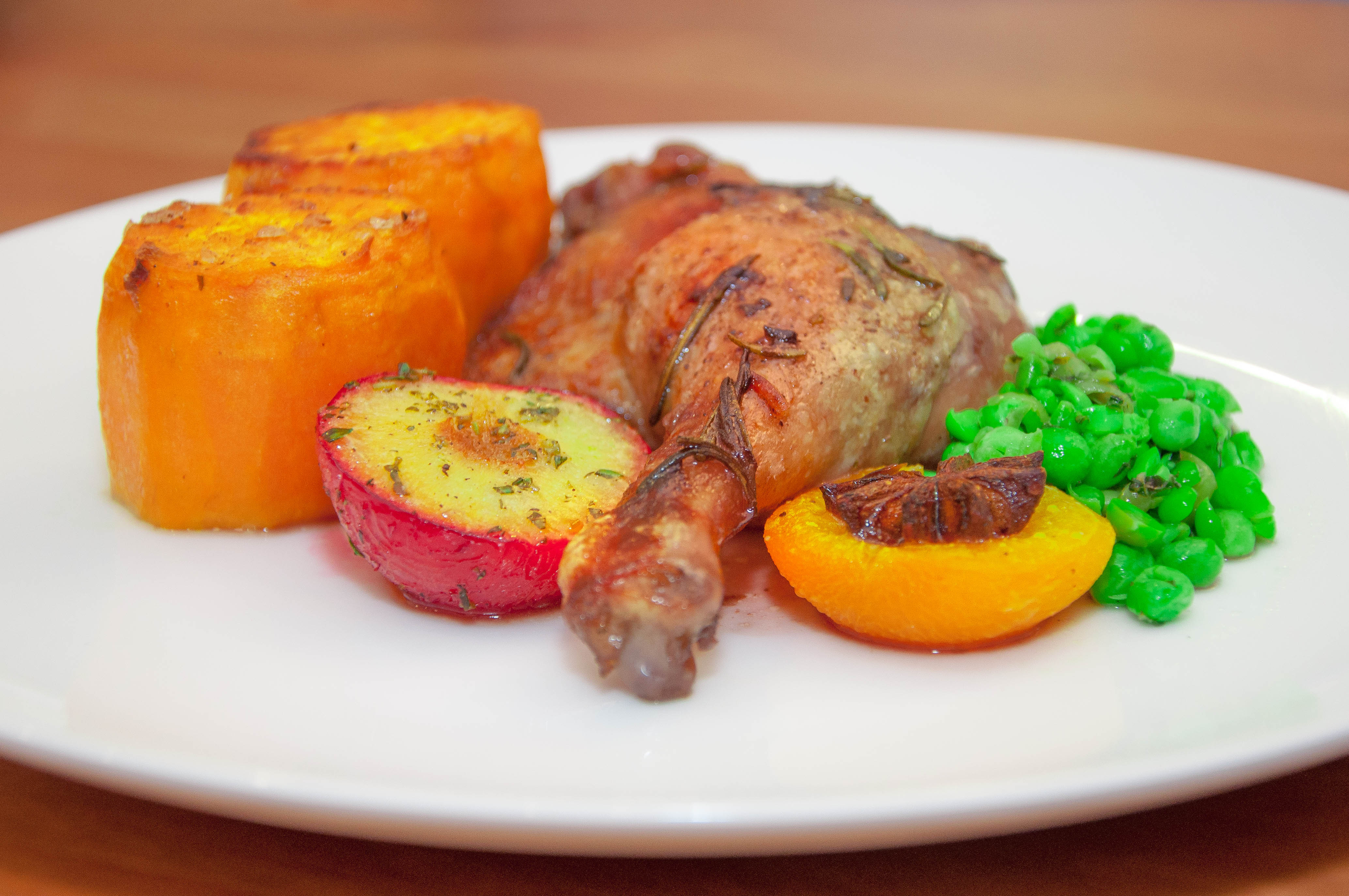
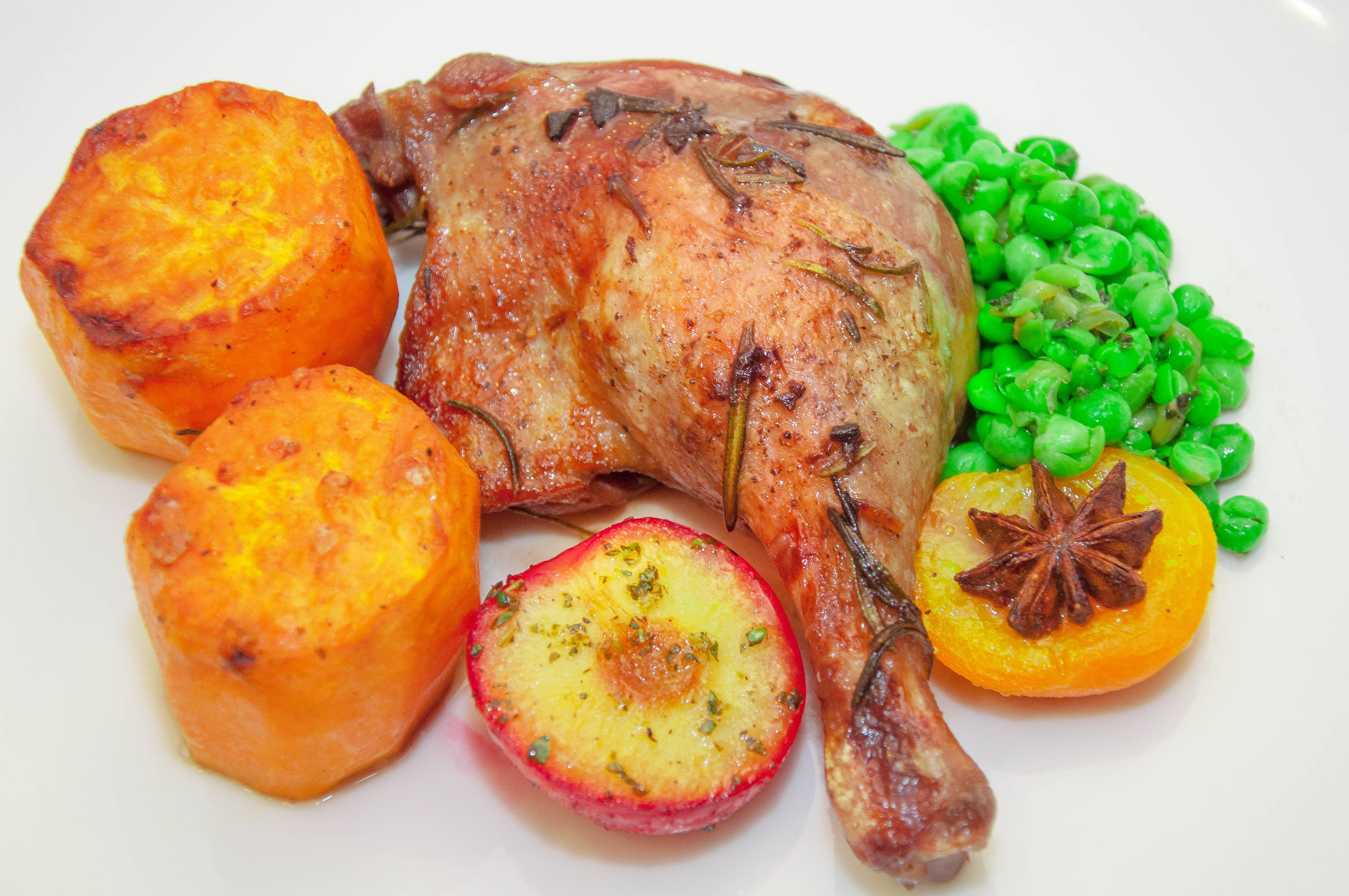
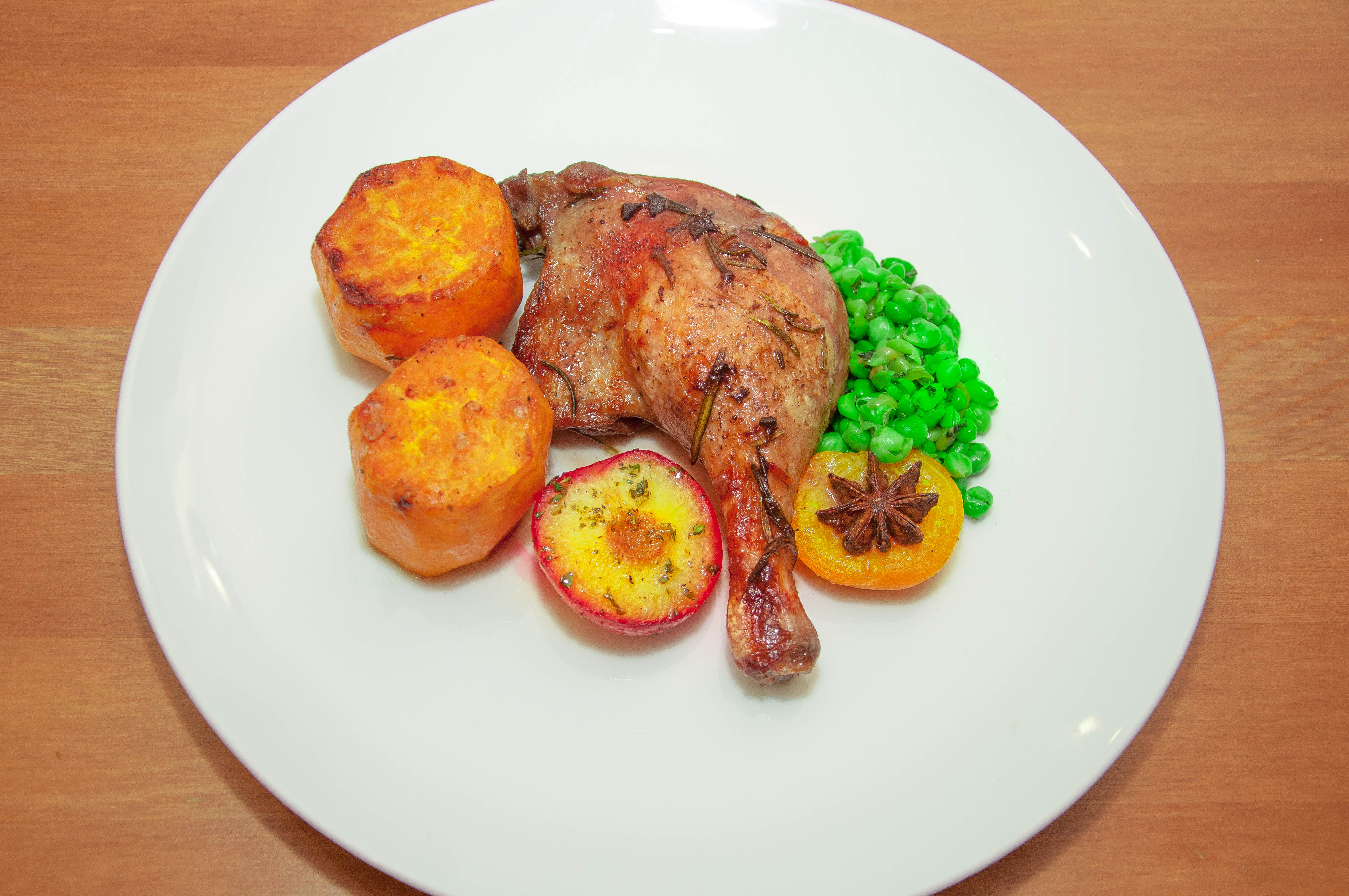
ROAST DUCK LEG, HERBED PLUM, MUSTARD APRICOT AND CRUSHED MINTED PEAS WITH FONDANT SWEET POTATO

DSC_0661

DSC_0644

RECIPE_INFO_0006

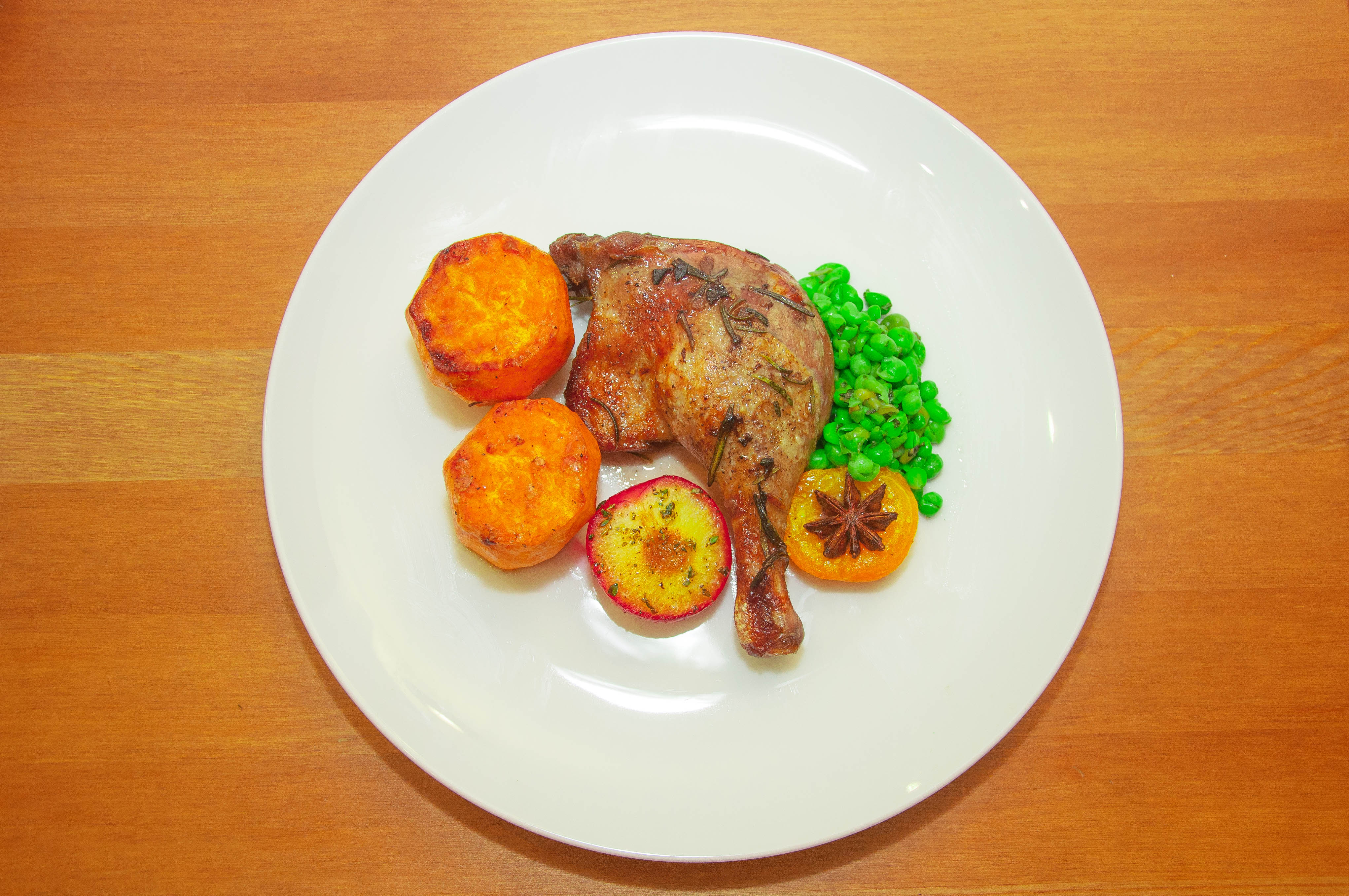
This warming, slow roasting dish is bursting with flavour, and a veritable rainbow of amazing colours, coming from the rich sauce, sweet glazed fruit, earthy sweet potato and zingy vibrant peas – all of which are a great match for the meaty duck. You will definitely find yourself gnawing like a barbarian at the leg bones on this recipe. Duck legs are pretty cheap, full of deep flavours and rich fat, and perfect for cooking several at a time. Any left over fruit can be kept in the fridge and is awesome with cold meats and strong cheese. Timing is everything with this recipe and there are quite a few processes to juggle/remember to do at the right time, but if you’re organised, and careful, there is nothing thats actually too technically difficult in there. So go get stuck in with this great, hearty, colourful dish –

DSC_0665

INGREDIENTS

For the duck breast with plums + apricots

  • 2 good quality duck legs
  • 5 tsp fresh rosemary sprigs
  • 3 tsp chopped lemon thyme
  • 3 tsp freshly ground ground black pepper
  • 1½ tsp sea salt
  • 4 purple plums, halved, stones removed
  • 1 tbsp olive oil
  • can of apricot halves in juice, drained
  • 5 tbsp caster sugar
  • 500 ml red wine
  • 300ml chicken stock
  • 2 tsp runny honey
  • 1 red onion
  • 4 cloves of garlic – 2 roughly chopped
  • 2 tsp plain flour

For the Mustard Apricot Glaze

  • 1 & 2/3 cups lemon juice
  • 2 cups sugar
  • 1 tsp english mustard/50g mustard powder
  • 4 star anise
  • 3 sprigs lemon thyme

For the crushed minted peas:

  • 2 tablespoons olive oil
  • 1 handful fresh mint, leaves picked
  • 1 pound (500 grams) frozen peas
  • 2 large knobs butter
  • Sea salt and freshly ground black pepper

Fondant Sweet Potatoes:

  • 2 Sweet potatoes
  • cold water
  • 1 tablespoon light olive oil
  • sea salt
  • black pepper, freshly ground
  • 1 tablespoon butter
  • 2 rosemary sprigs, fresh
  • 1l chicken stock

DSC_0654

Preparation Method:

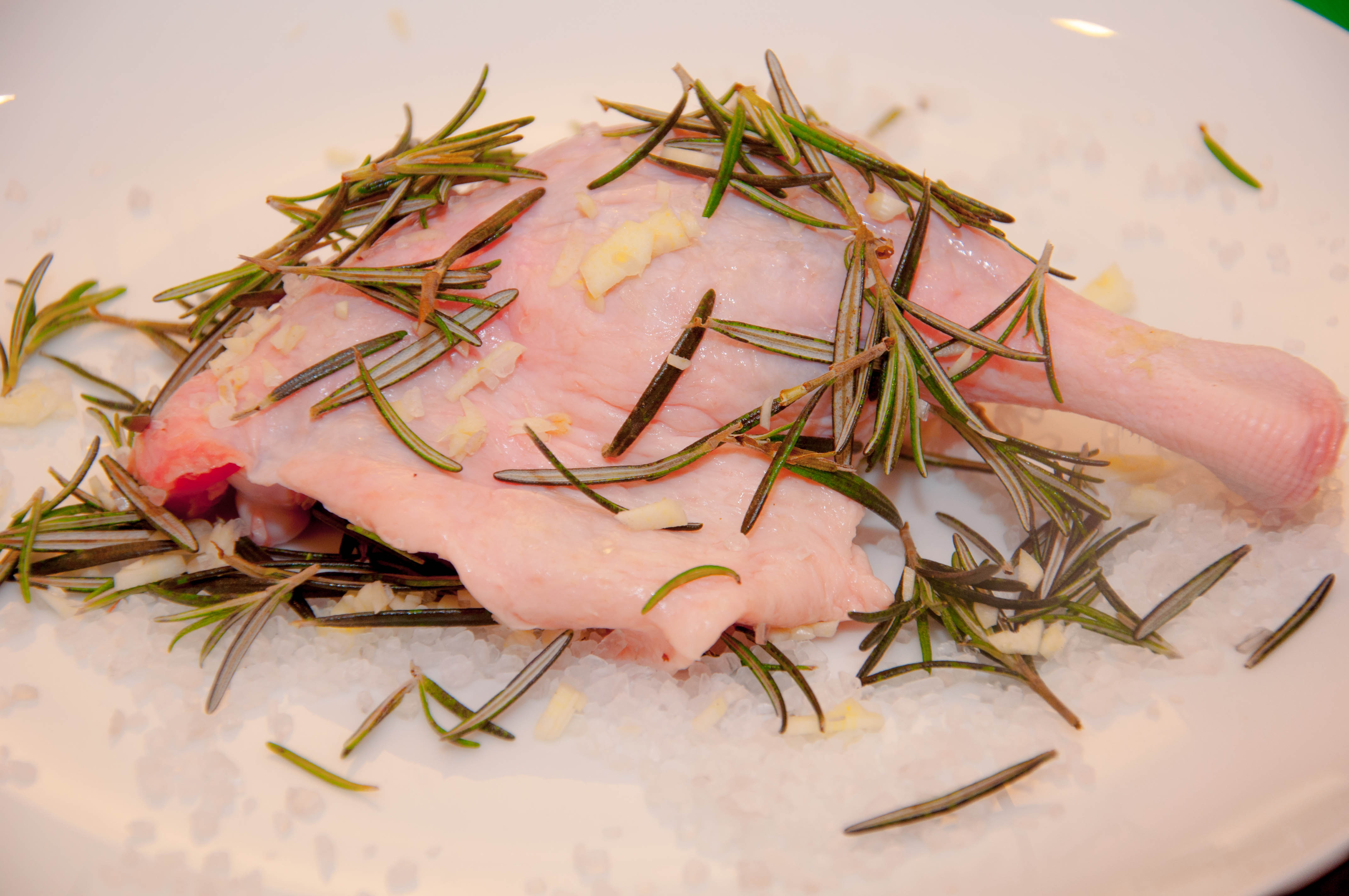
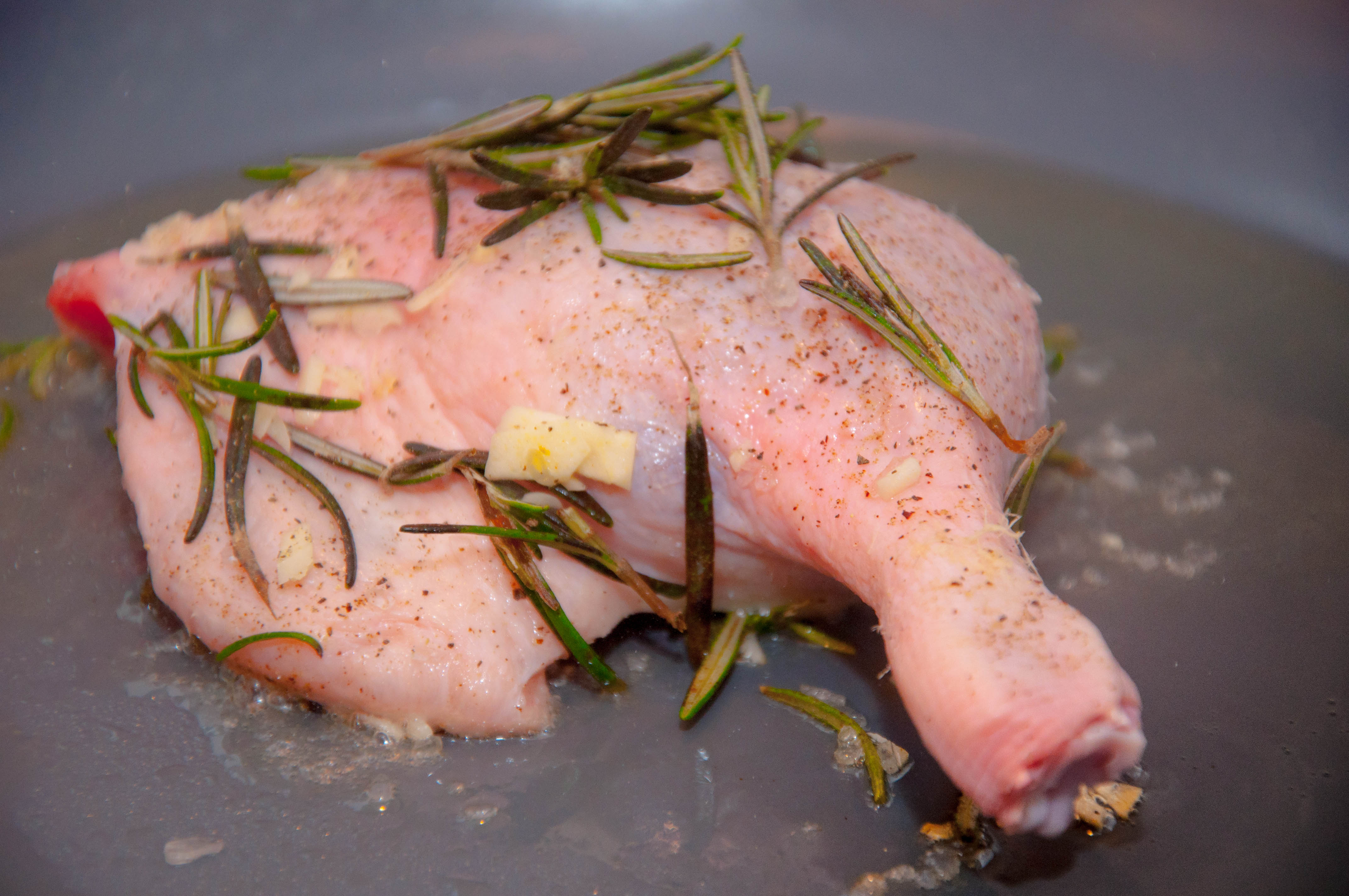
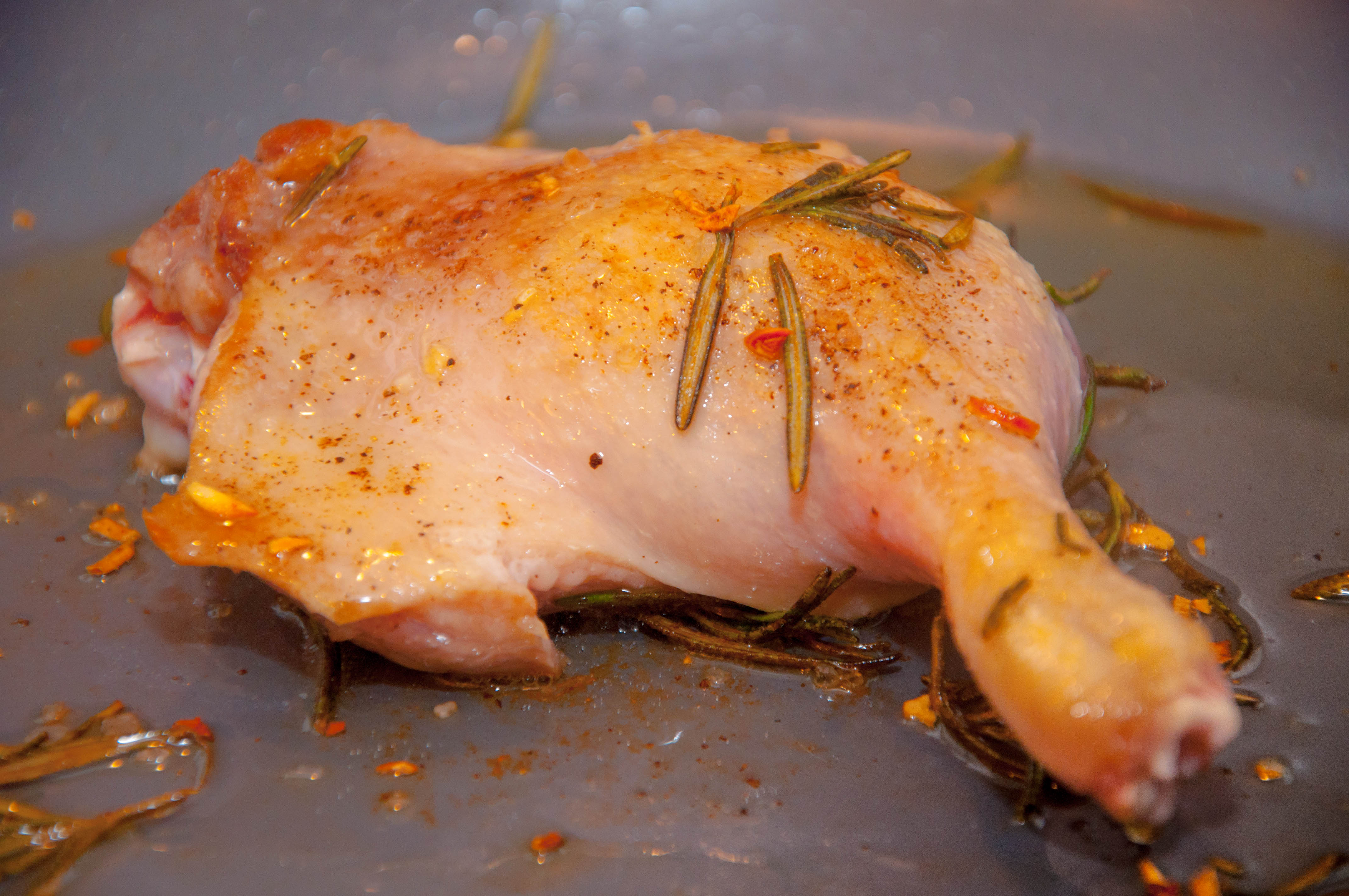
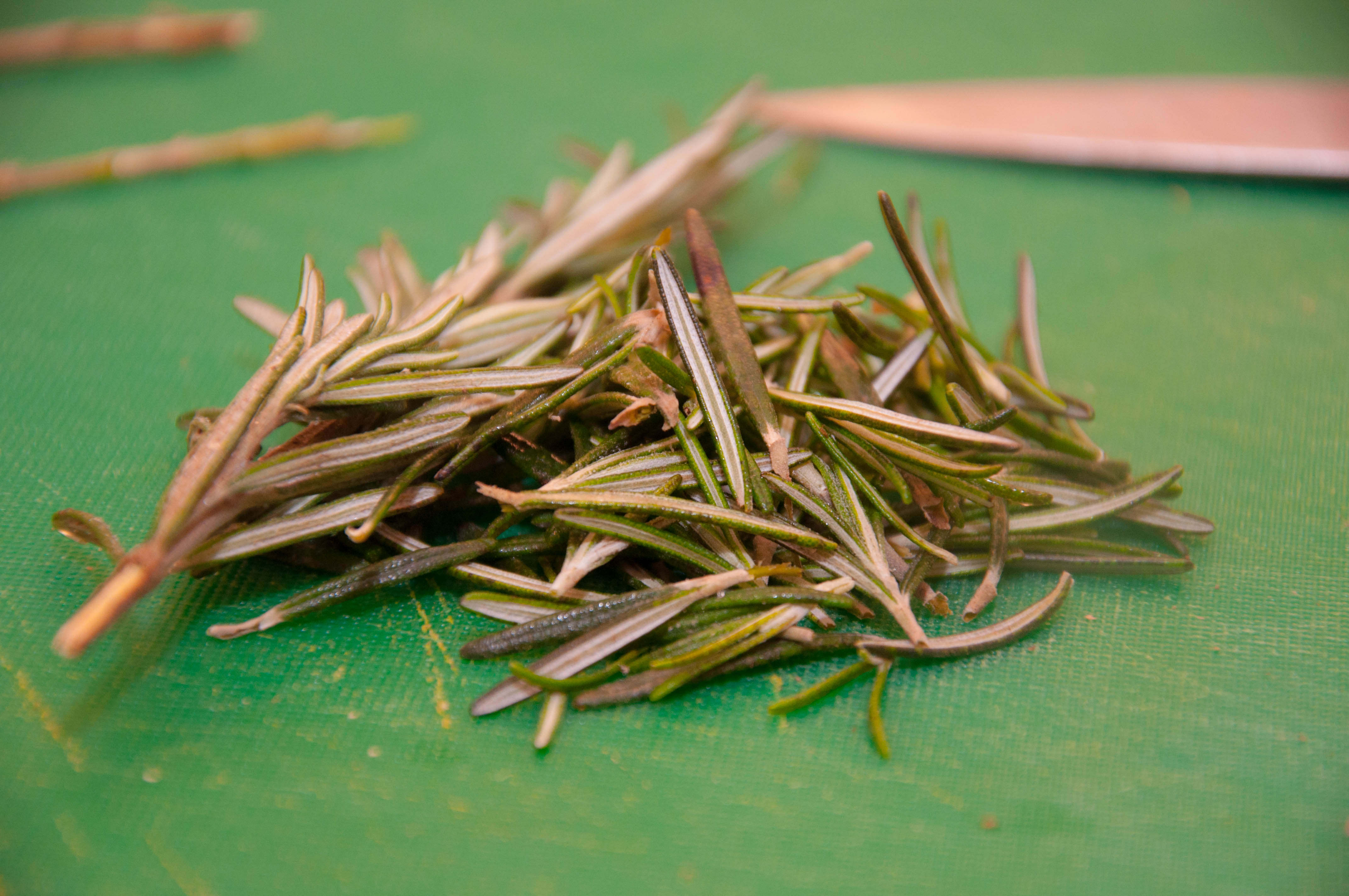
  1. Preheat oven to 190°C, fan 170°C, gas mark 5. Season the duck legs all over with salt, pepper, chopped garlic and the rosemary sprigs and brown in a hot pan on both sides. Set aside.
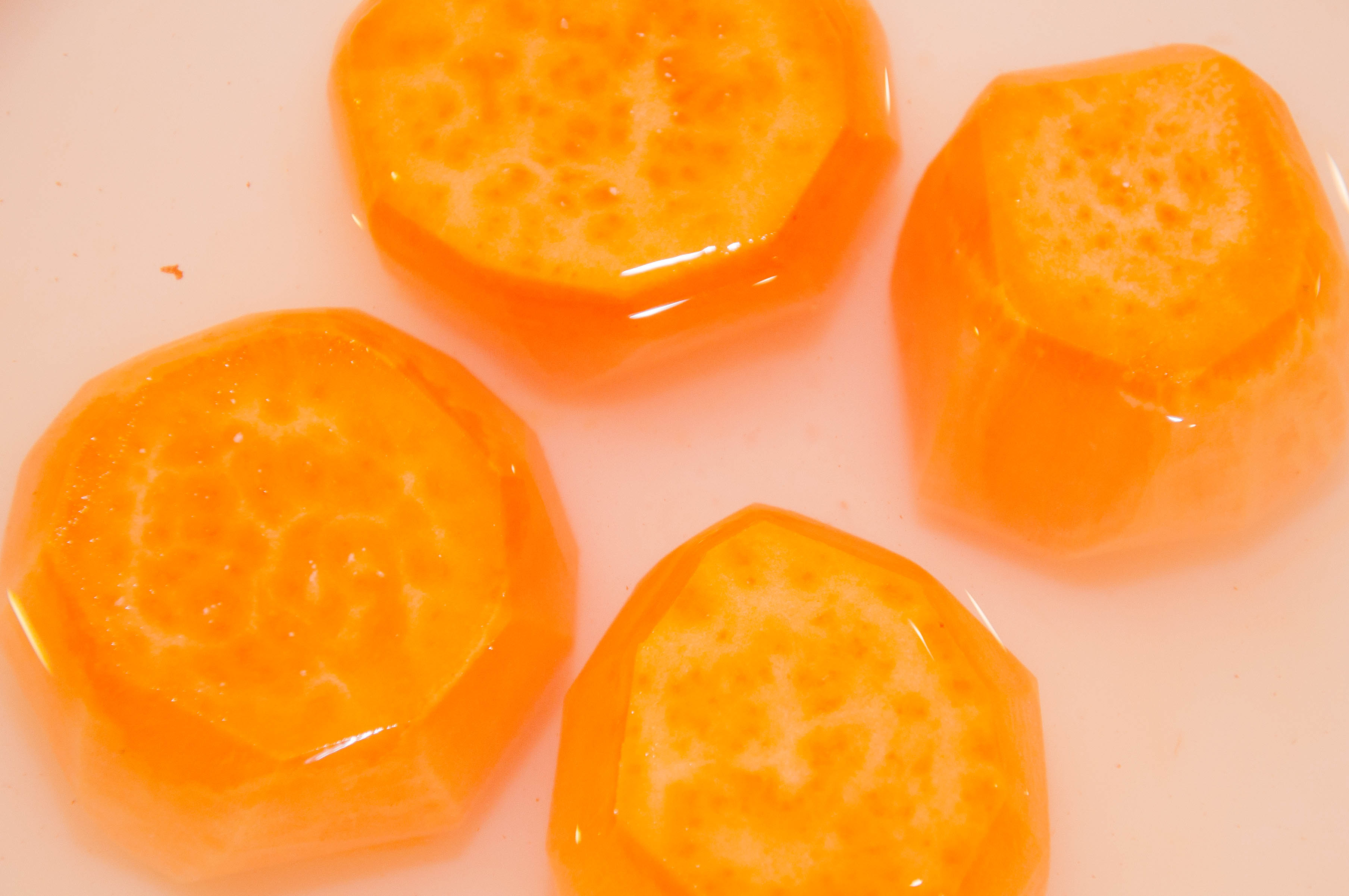
  2. Peel the sweet potatoes and slice off pointed ends to create flat bases. Slice in half so you have 4 total pieces. Make as even to each other as possible in terms of height and width – around 3cm wide by 6cm tall. Place in a bowl and cover with cold water. Soak for 10 minutes and place on paper towels. Pat dry.
  3. Heat vegetable oil in the same pan on the stove. When the oil begins to shimmer and move in the pan, add the potatoes, prettiest side down. Cook for 4 minutes and season the top with salt and pepper.
  4. Turn the potatoes over and cook the other side for 4 minutes or until browned and slightly crisp. Season this side with salt and pepper as well.
  5. Use tongs and a paper towel to blot out the remaining oil and add butter and rosemary sprigs to the pan. When the butter melts and begins to brown, use tongs and brush rosemary over all of the potatoes. Transfer your potatoes, butter and herbs to a shallow pyrex oven dish.
  6. Pour in the chicken stock, so that it almost covers the potatoes and place in the oven. You will need to cook them for roughly 60-70 minutes or until the a knife can pierce the entire potato.
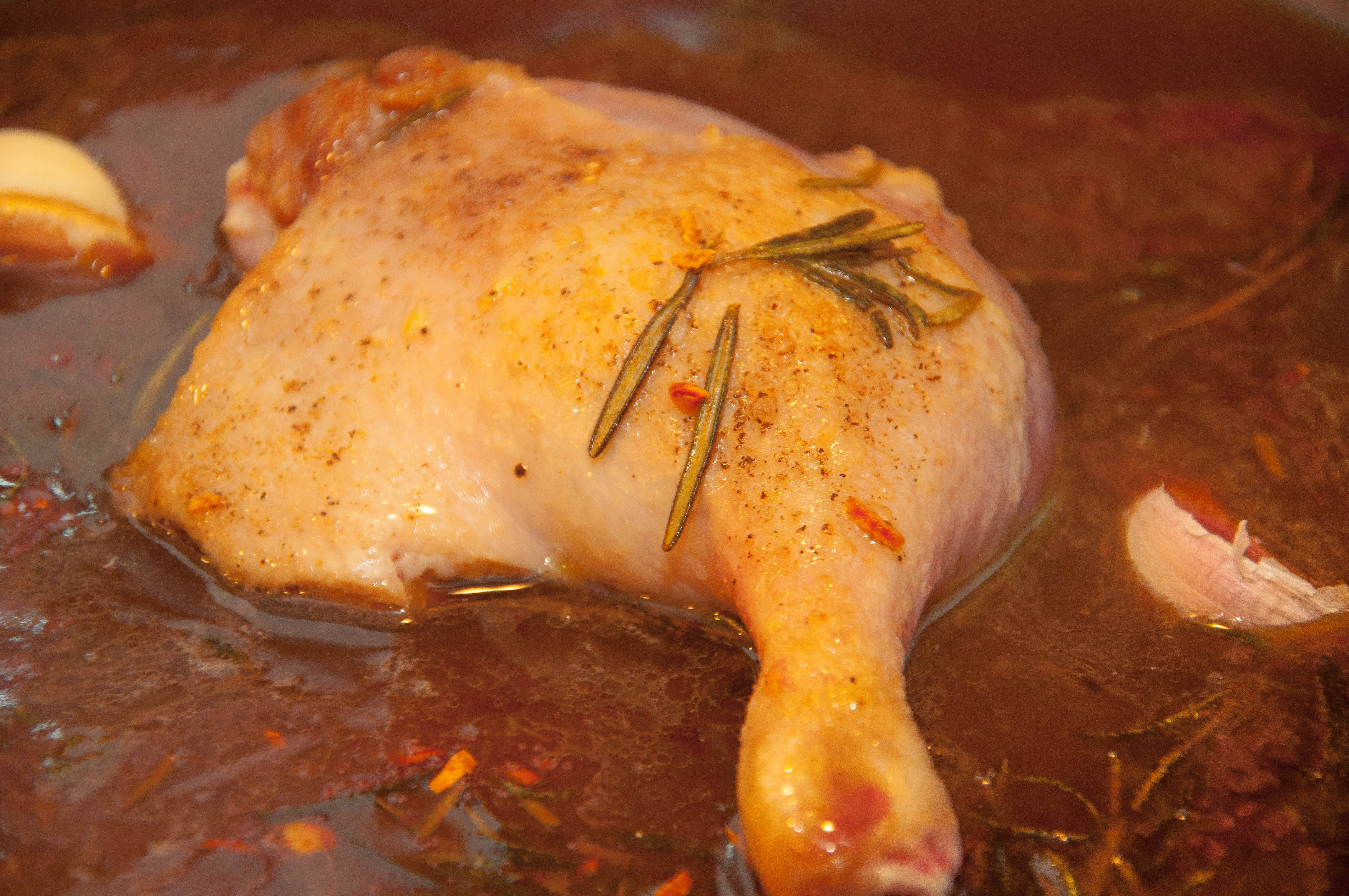
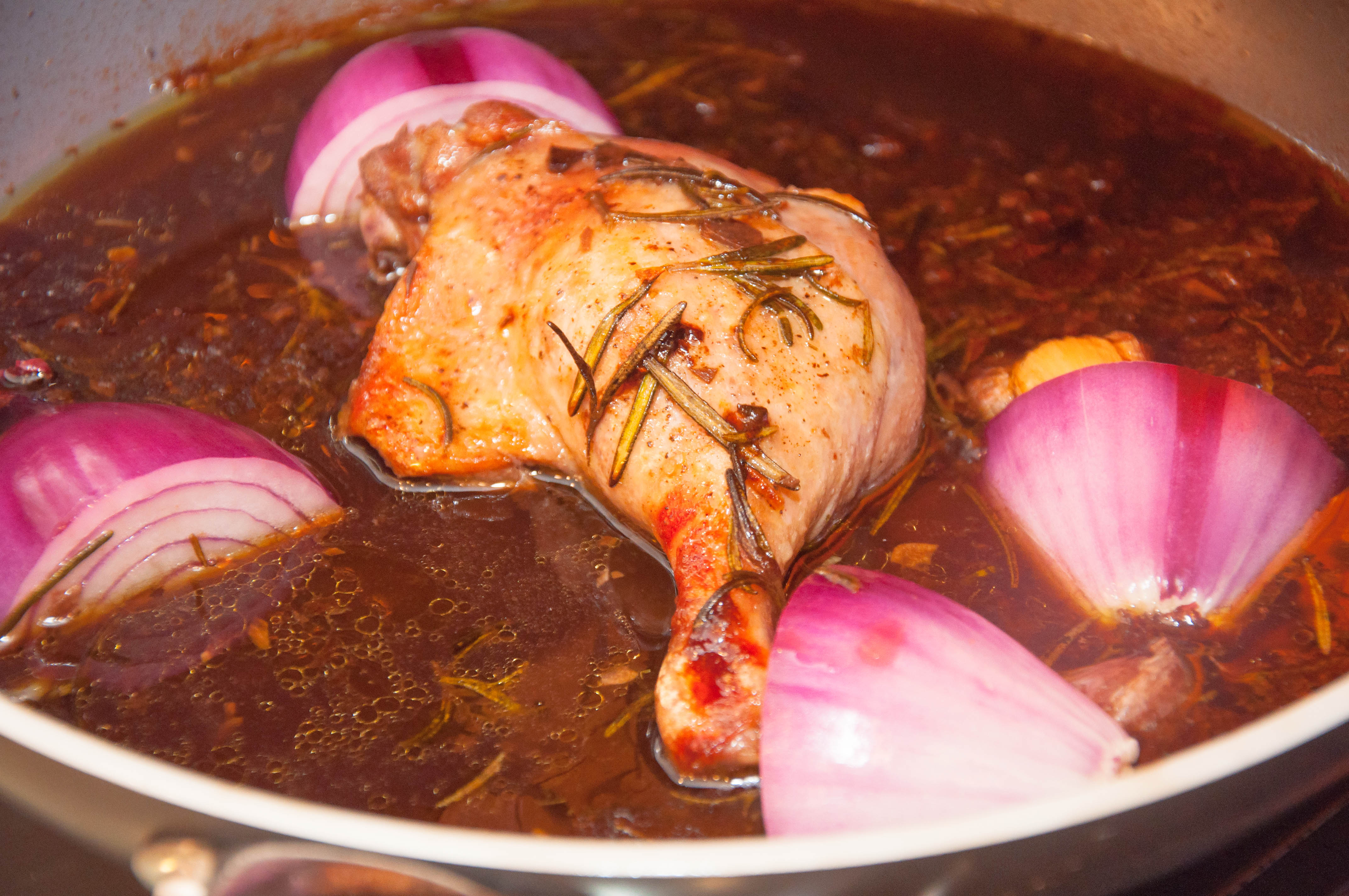
  7. Add the HALF the red wine to the pan on the stove (the same one used for the potatoes and browning the duck) and simmer until reduced by half. Add the chicken stock, more rosemary, 2 garlic cloves and the red onion peeled and quartered and a 1 tbsp of sugar .
  8. Return the duck legs to the pan, skin-side up. Drizzle the honey on top liberally. Place the oven-proof pan into the oven and cover with tin foil. This will cook in the oven for one hour or until the meat is tender.
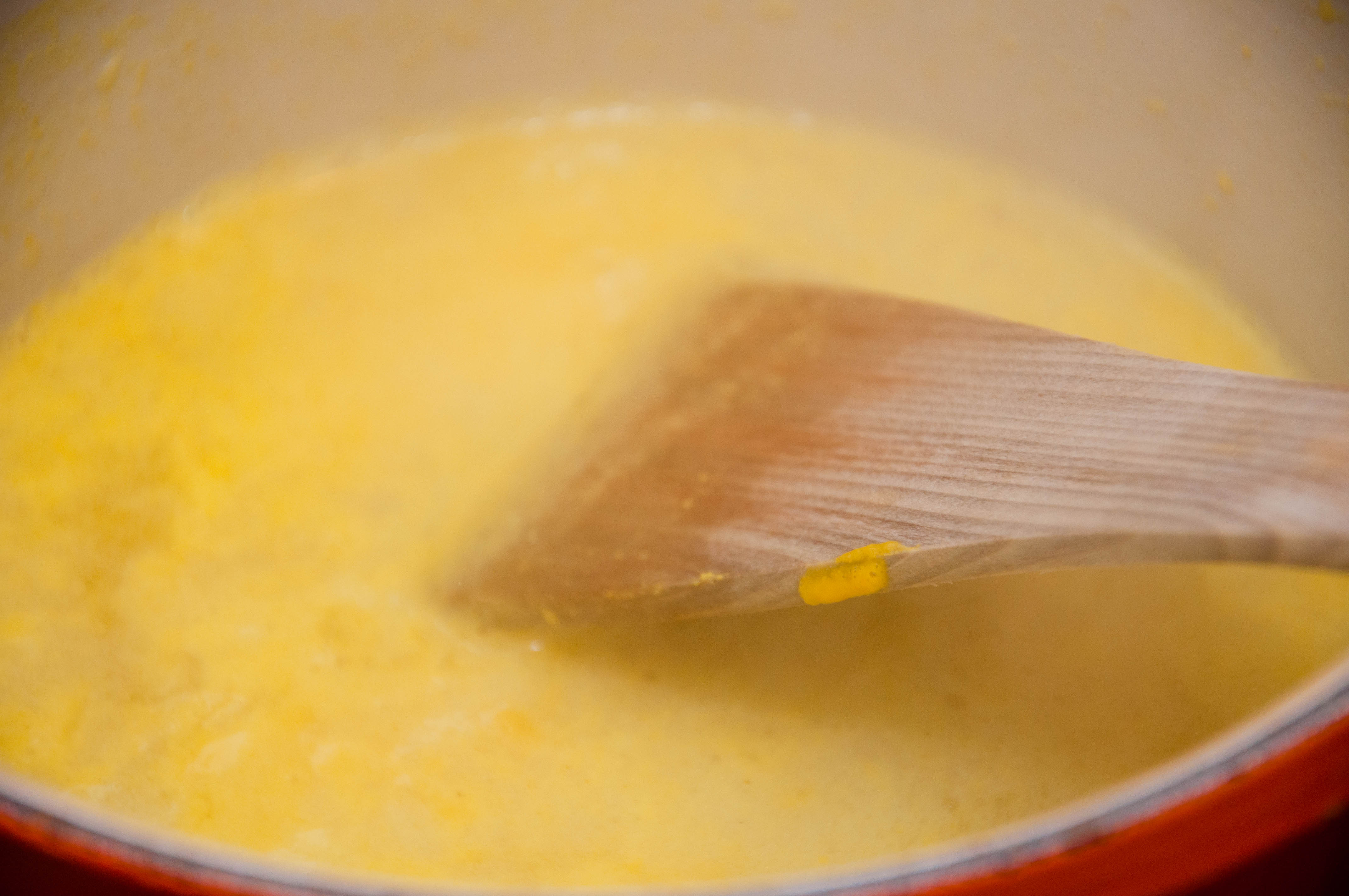
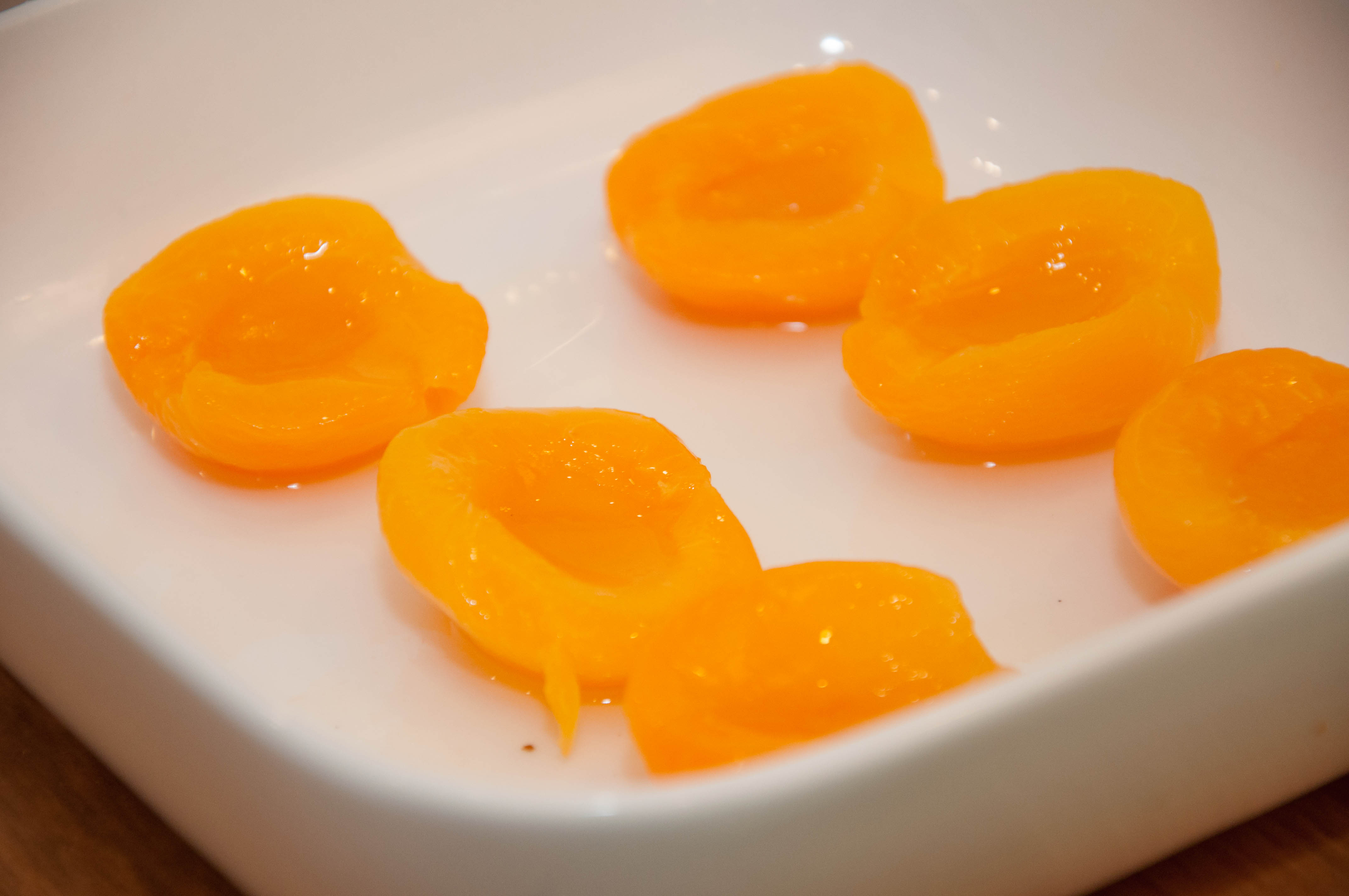
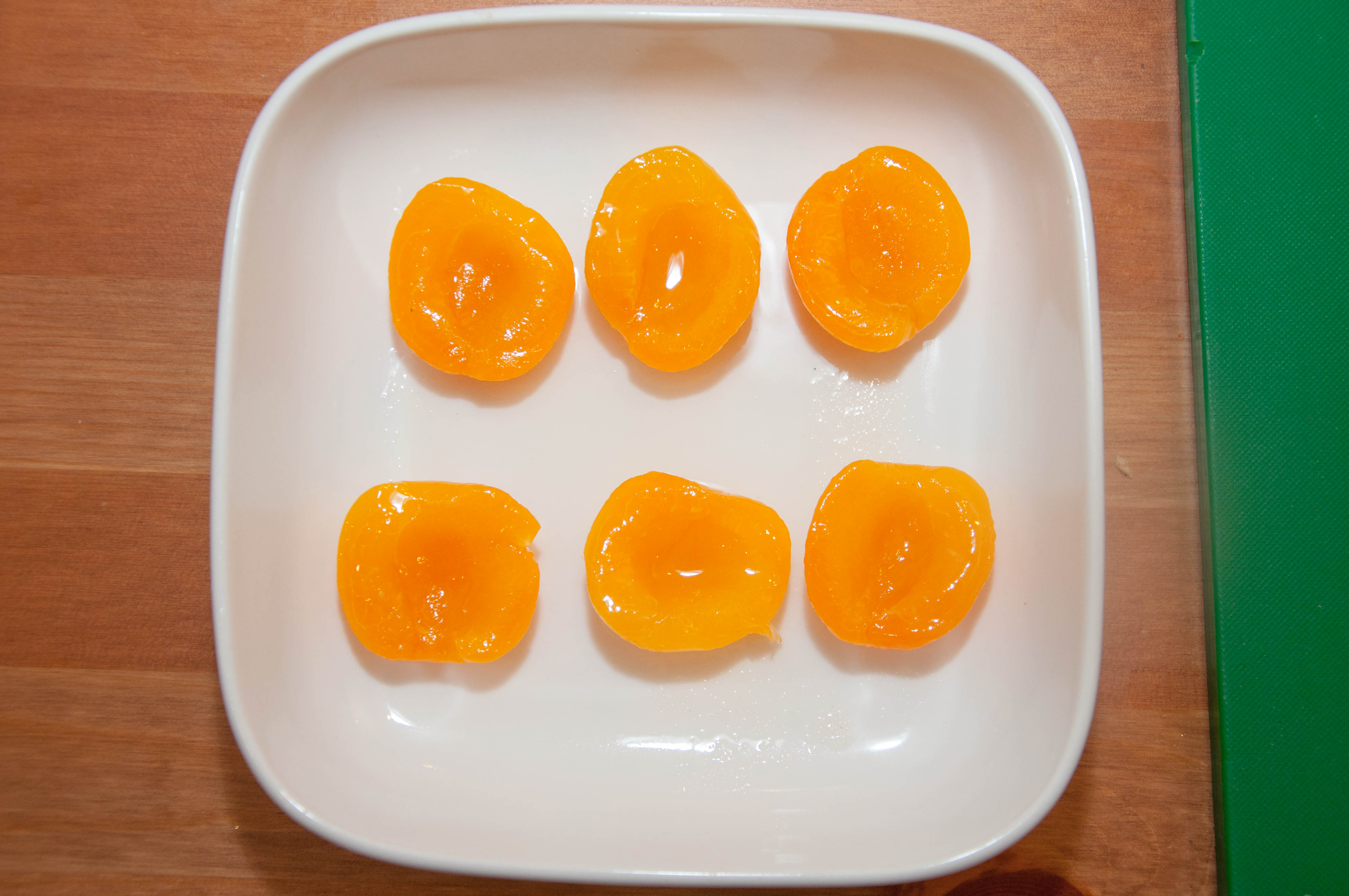
  9. Meanwhile, for the Mustard Apricot Glaze, make a thin syrup of the lemon juice, ½ cup of water, and the sugar, and whisk in the mustard. In the same saucepan place the fruit, star anise, lemon thyme and bring to the boil and then simmer for 4 minutes. Remove the fruit from the heat and put it in a bowl. Pour the mixture over the apricots. Cover and set aside to soak.
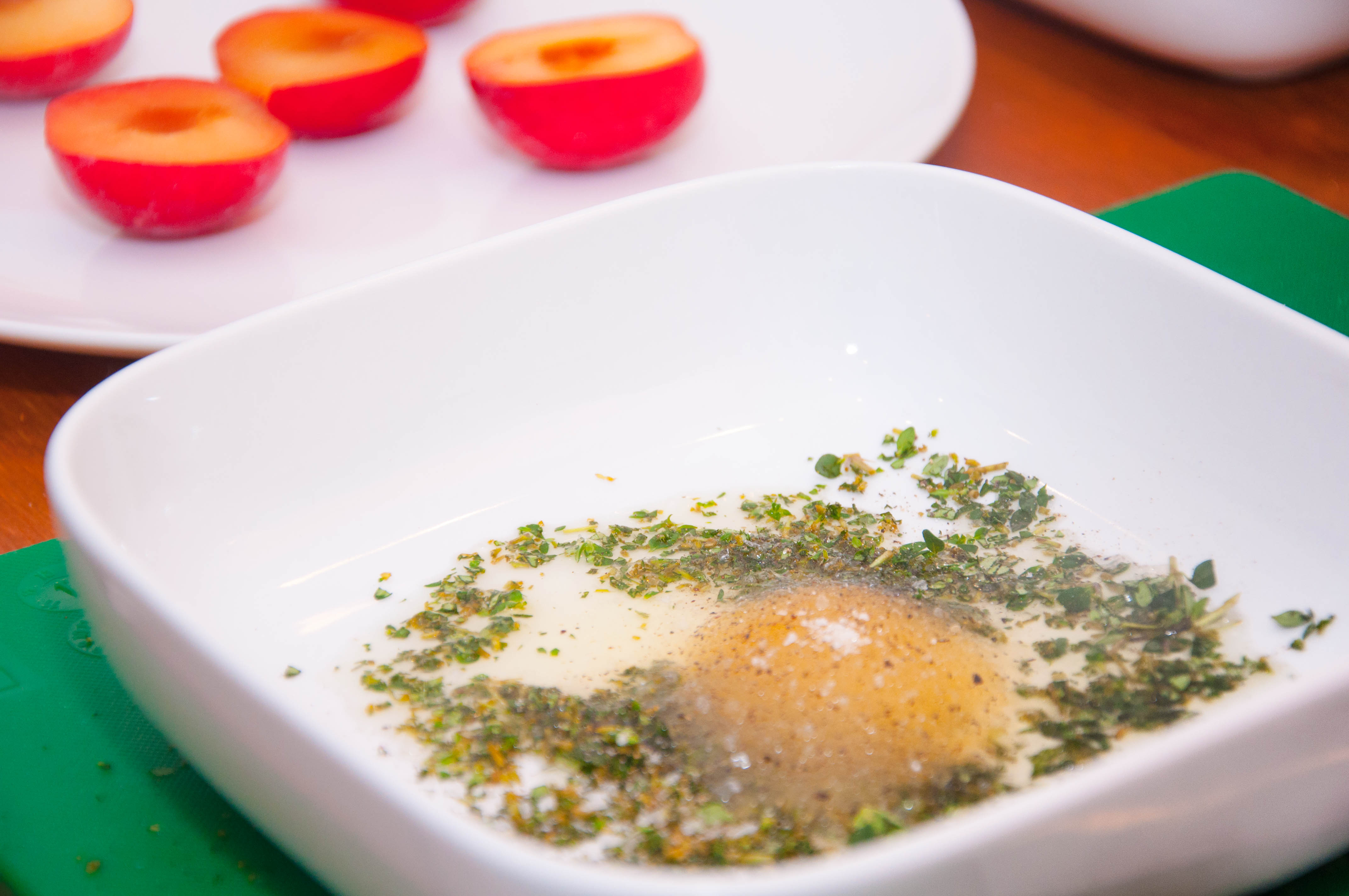
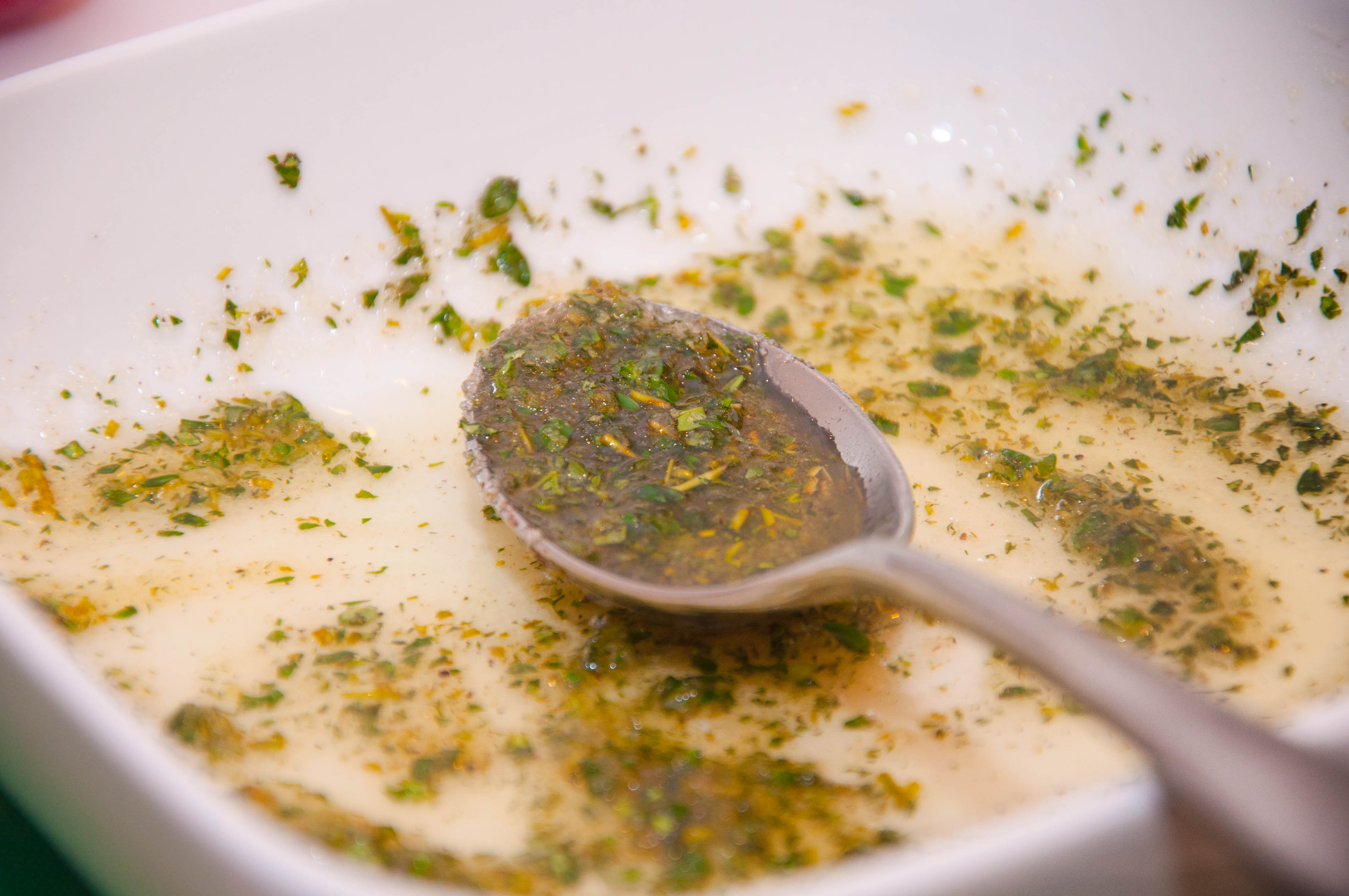
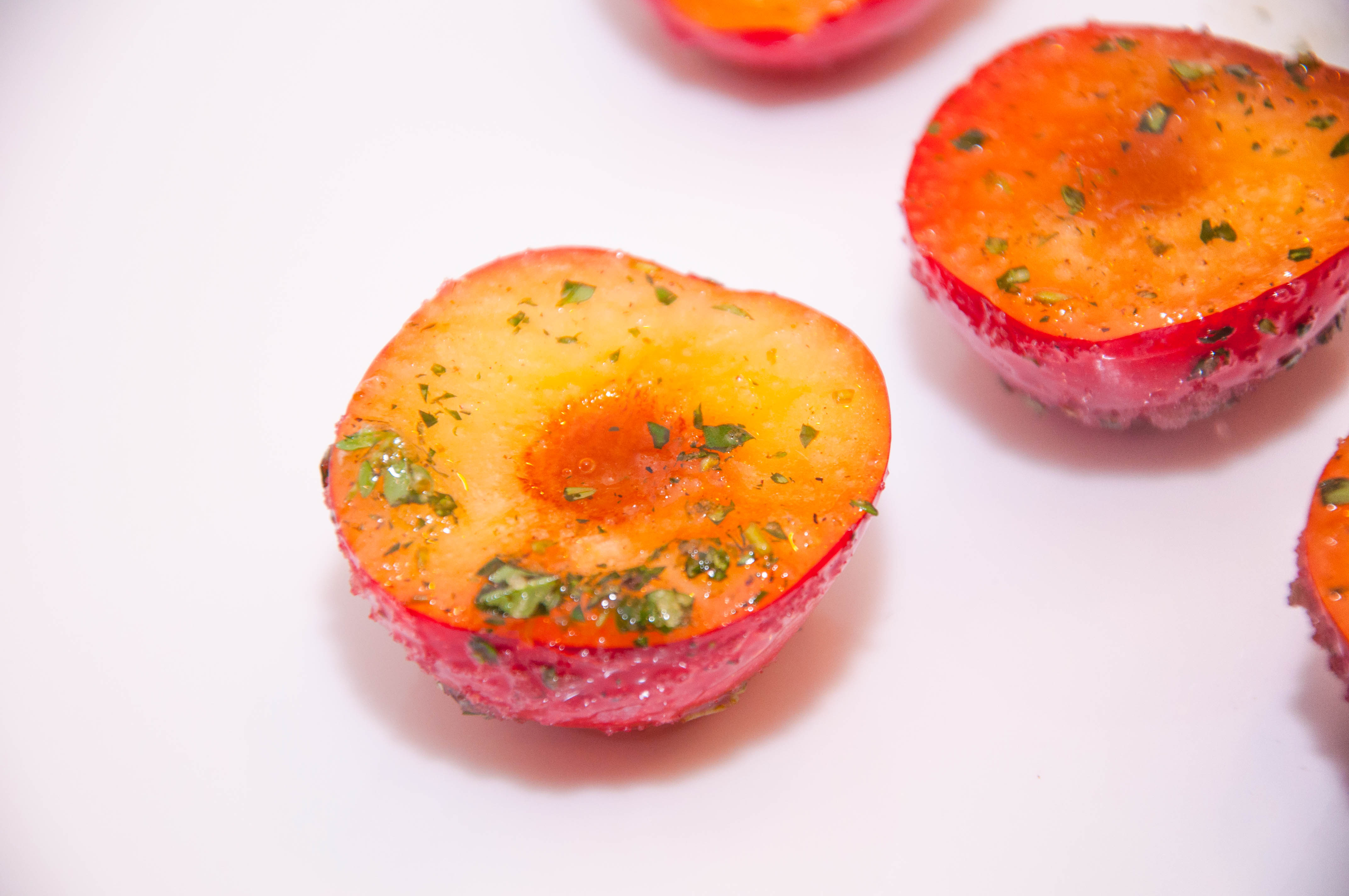
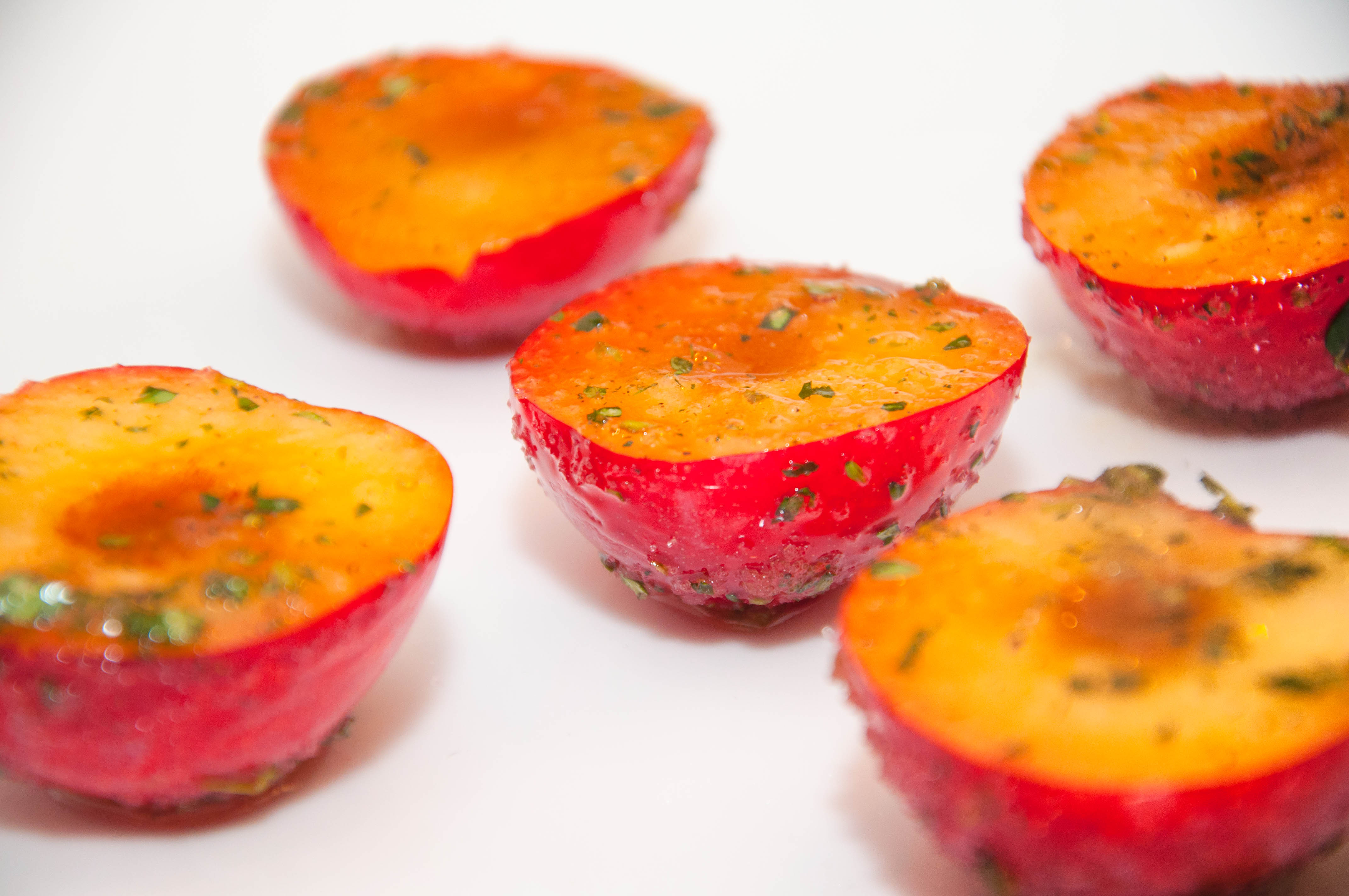
  10. Place the plums on a baking sheet. Mix the chopped lemon thyme, black pepper and salt with the olive oil and sugar until well combined, then gently rub the mixture over the plums.
  11. After an hour and when the duck is cooked remove it from the oven and set aside, still covered in the foil, and leave to stand. Turn the oven temp down to 160°C, fan 140°C, gas mark 3. Spread the apricots and plums in a shallow ovenproof dish, and bake in the oven for the 20 minutes until lightly caramelised.
  12. Meanwhile transfer the peas to a medium saucepan and stir in the olive oil and herbs, plenty of salt and a pinch of pepper.
  13. Cook the crushed peas on a medium heat with the lid on for 3 minutes. Stir in the lemon juice, then taste and correct the seasoning if you need to.
  14. Crush the peas roughly in a food processor or with a masher. Do not purée them, as it is important to retain much of the texture.
  15. Remove the duck leg from the pan and place on a plate, and cover in foil. Place the pan with the remaining sauce on the hob at a medium heat. Add 3 tbsp of the juice from the apricot can, 3 tbsp of caster sugar, and the rest of the red wine – then scatter in 2 tsp of plain flour. Stir, leave to simmer and reduce for a few minutes until you have a thick gravy like sauce.
  16. Remove the sweet potatoes from the oven and remove from the stock. Mix half cup of the stock into the sauce reducing on the hob.
  17. Remove the apricots and plums from the oven and set aside.
  18. To serve, spoon the peas on to four serving plates arrange on the plate alongside the duck leg – place two roasted plum halves and one of the apricots on each plate, and then the fondant sweet potatoes by the duck. Strain the pan reduction and drizzle a very SMALL amount onto the duck (it will be quite salty and strong – so not too much).

MUSIC I COOKED TO:
DSC_0417DSC_0431DSC_0437DSC_0415DSC_0406DSC_0438DSC_0447DSC_0450DSC_0452DSC_0454DSC_0457DSC_0469DSC_0476DSC_0483DSC_0489DSC_0496DSC_0504DSC_0513DSC_0525DSC_0531DSC_0533DSC_0544DSC_0549DSC_0551DSC_0554DSC_0561DSC_0565DSC_0568DSC_0582DSC_0591DSC_0628 DSC_0664

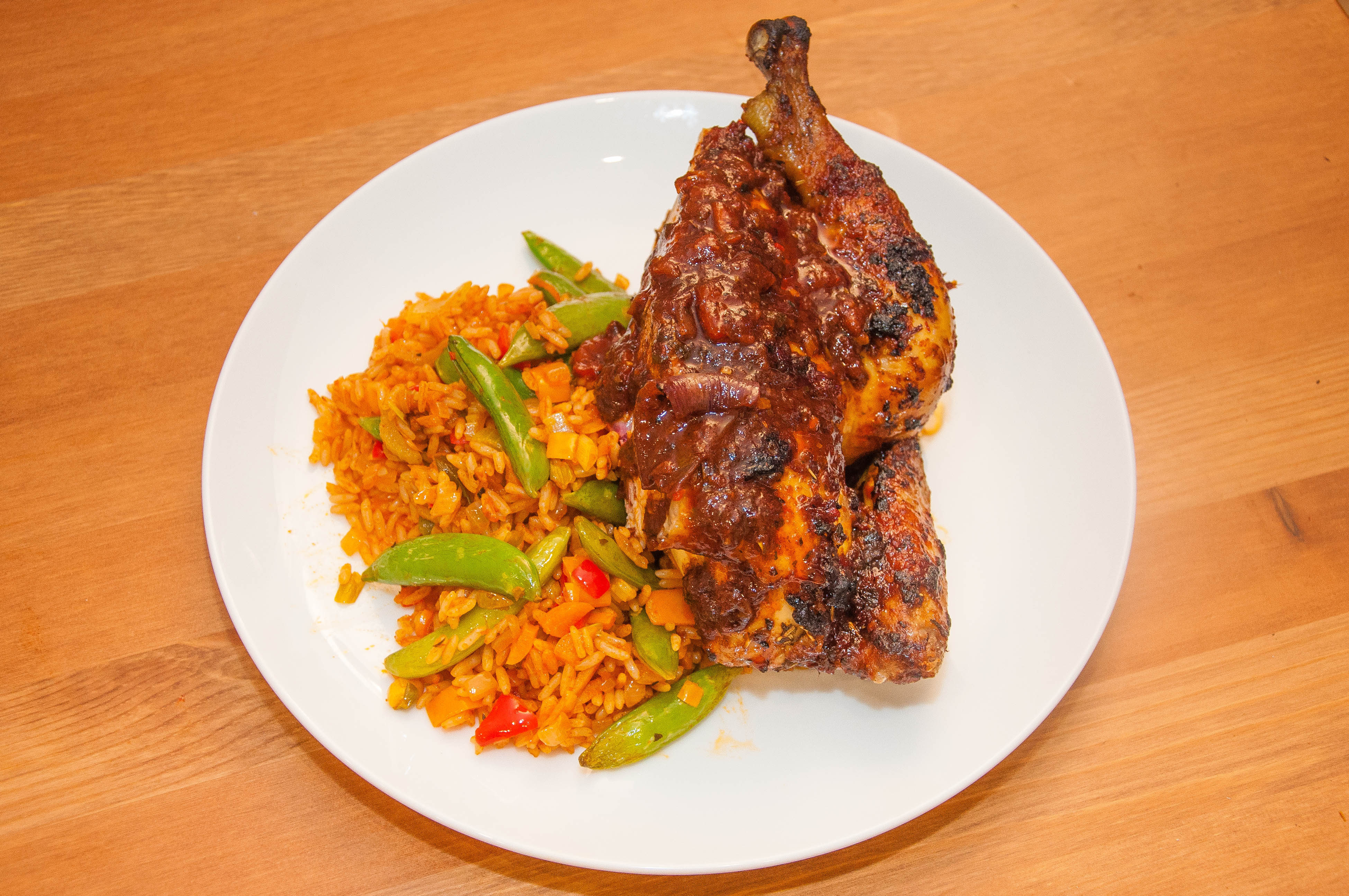
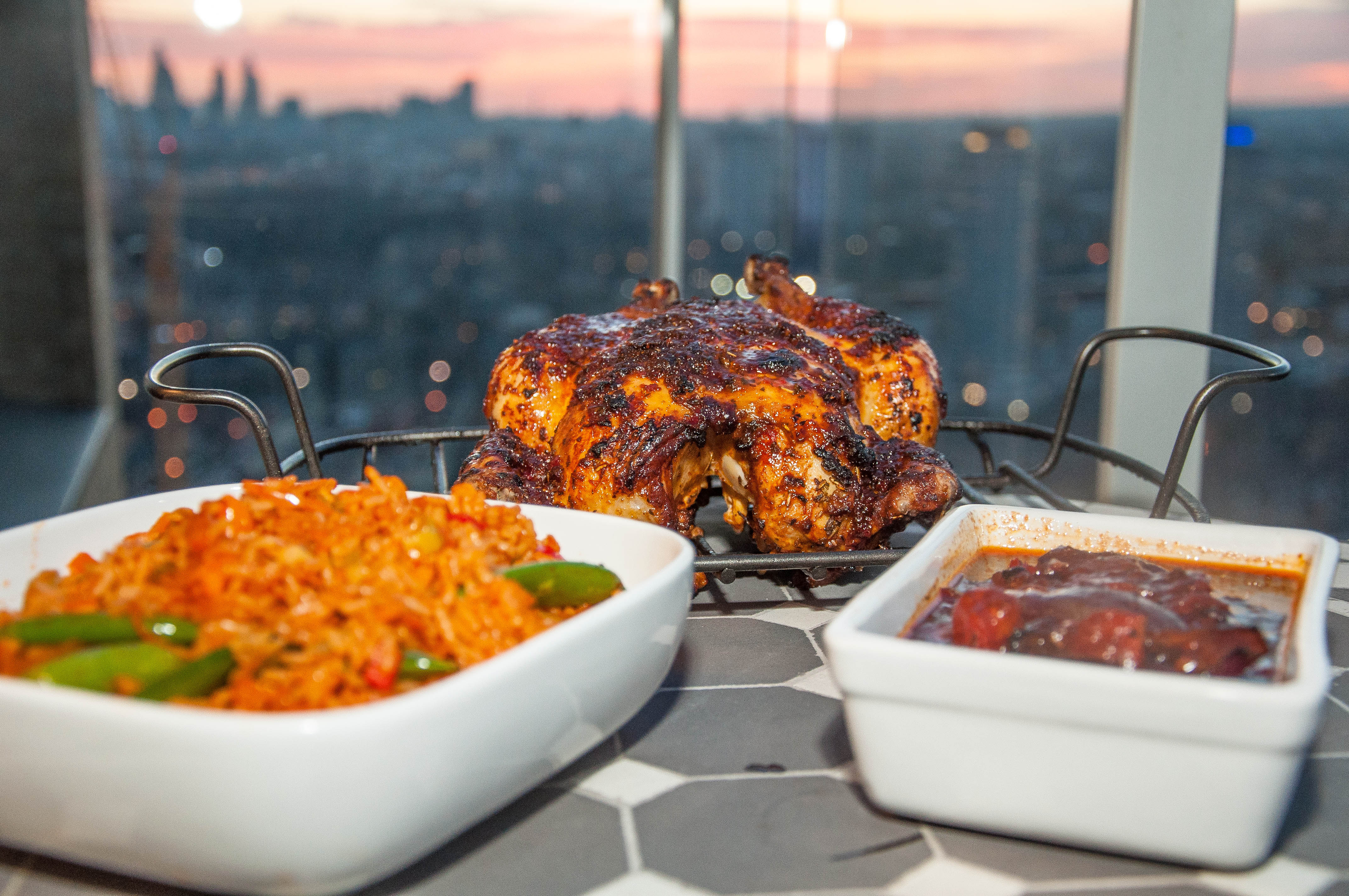
‘WHO NEEDS NANDOS’ ULTIMATE PIRI PIRI CHICKEN AND SPICY RICE

DSC_0266DSC_0261DSC_0276

RECIPE_INFO_0004

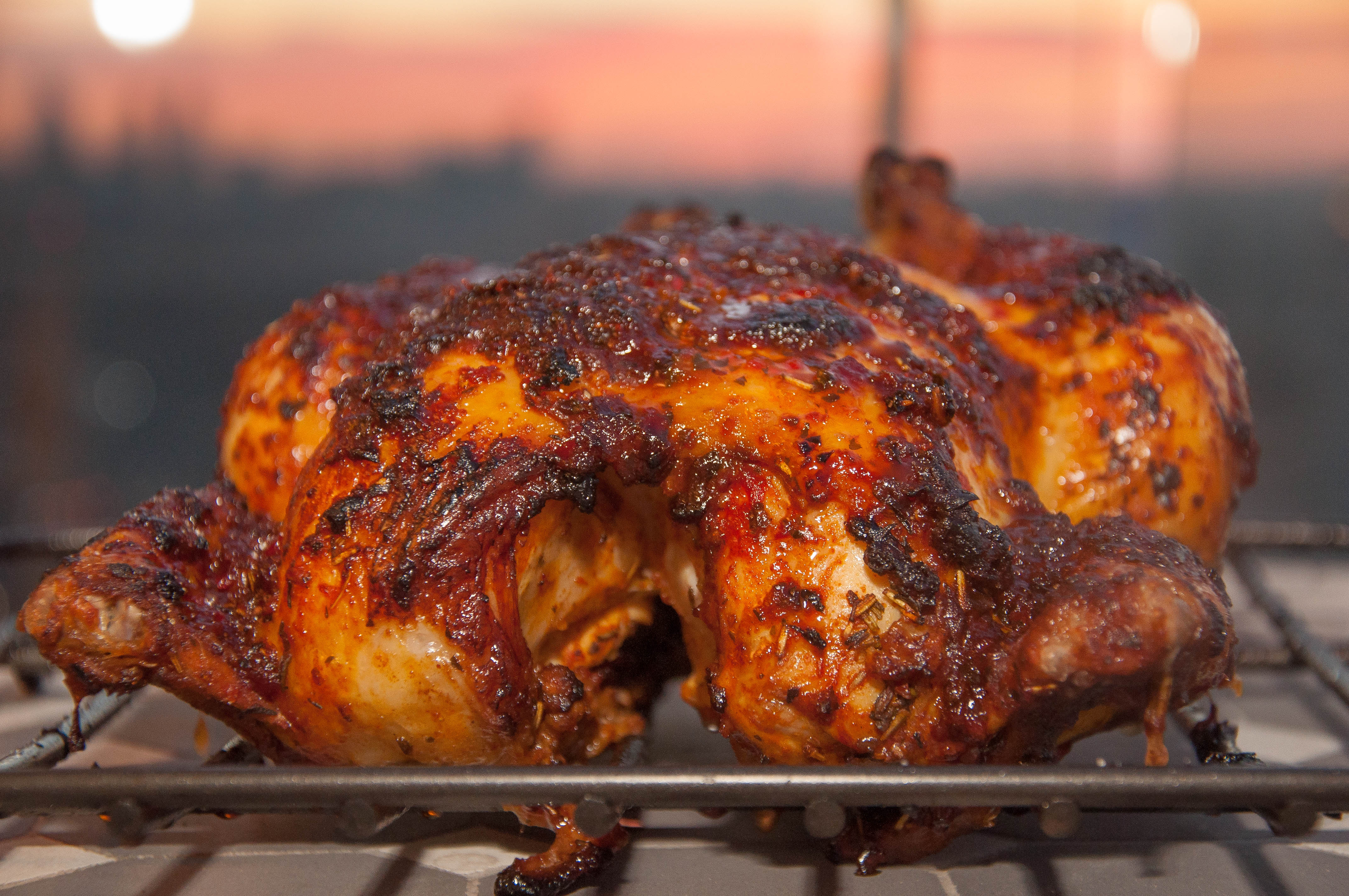
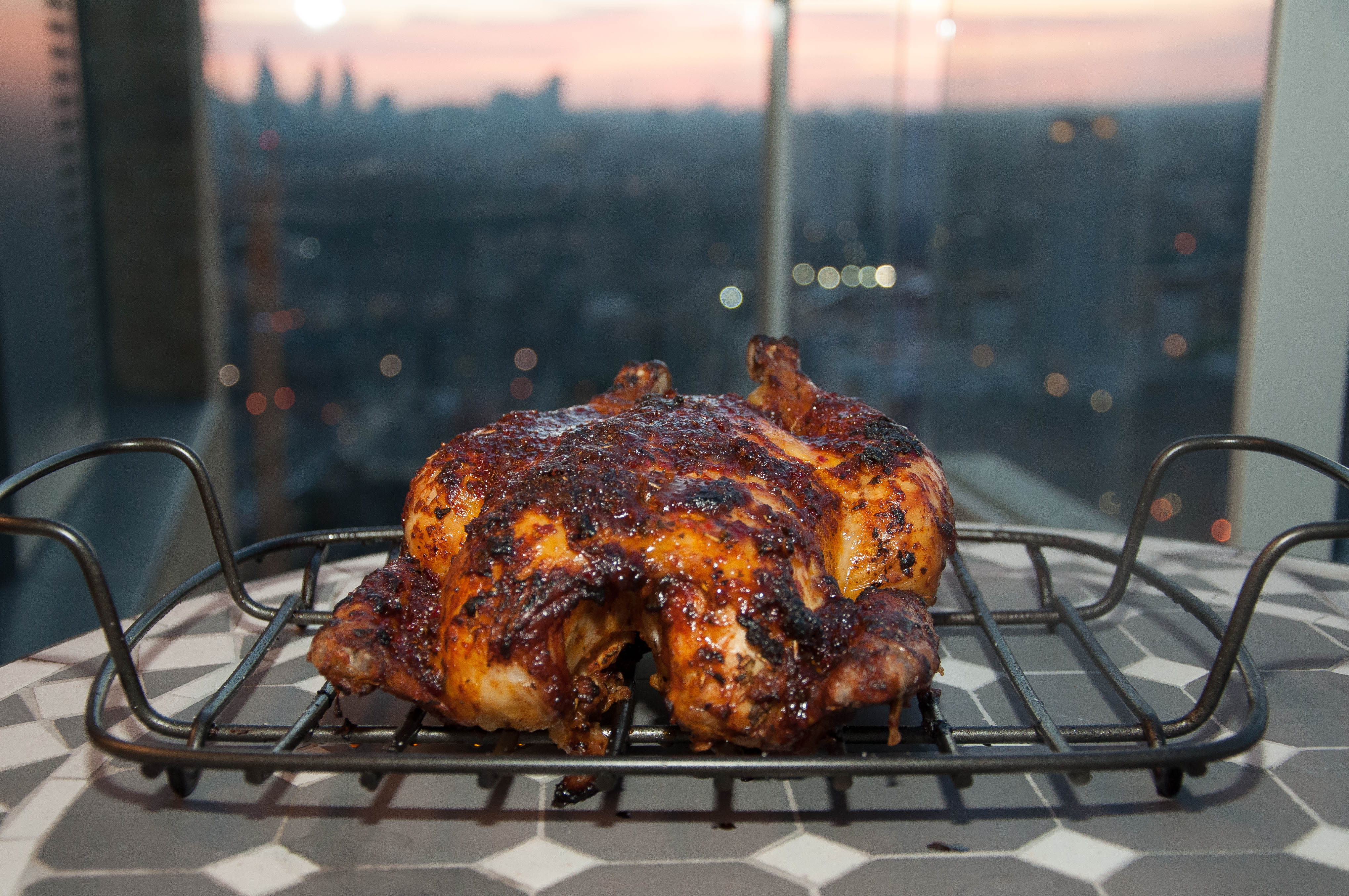
So there is a brief bit of history behind this recipe’s origination. Basically about 2 years ago a certain well known Piri Piri chicken chain changed their loyalty cards and refused to accept the two I had diligently been collecting stamps for – despite the fact they were completed and I was eagerly anticipating two, whole, juicy, spicy and most importantly FREE chickens. Thanks to this crappy customer service, in a fit of (pathetic) rage I decided to boycott said restaurant chain and invent my own Piri Piri chicken recipe to get me over my frequent cravings.

Thus began many hours of sad, sad research into Piri Piri preparation. And not just Piri recipes – I looked at all sorts of spicy chicken recipes from american bbq to indian curried, in my quest to invent what I believe to be the ultimate in Piri Piri chicken. This isn’t a purists Piri chicken – I’ve added a few elements and steps that you wouldn’t find a your average, bog standard Piri recipe – But it is better! This is, what I hope, a Piri Piri recipe would look like if it evolved towards self awareness.

I’ll admit that this recipe does require a smidgeon more effort than popping down to your local high street food chain… BUT it is so worth it. The extra effort is minimal – all thats required is a small amount of pre-planning and effort in order to prepare the dry rub salt cure for the chicken and cook some rice about a day before hand. This dry rub may seem like a lot of needless prep, but the extra juicy, moistness and booming flavour it adds to the meat is astounding. Dry rubs essentially work by using the salt/sugar to draw out the water in the meat, allowing it to mingle with the flavours in the cure, before, through a process of osmosis, all the surrounding moisture is drawn back into the meat. And just like that – BOOM – your meat becomes juicy flavour central. Then with an extra short marinade for good measure this recipe packs a hot, spicy, sweet, sticky wallop of Piri Piri awesomeness.

DSC_0320

INGREDIENTS

For the chicken dry cure rub

  • salt and freshly ground black pepper
  • 4 chopped and crushed garlic cloves
  • 2 tbsp. fresh rosemary leaves
  • 2 tbsp. fresh oregano leaves
  • 2 tbsp smoked paprika
  • 4 tsp. rock salt
  • 1 Tbsp. finely grated lemon zest
  • 10 sprigs lemon thyme
  • 2 tsp. light brown sugar

For the chicken

  • 2kg/4½lb whole free range/organic chicken
  • salt and freshly ground black pepper
  • 150ml/5fl chicken stock
  • 250 ml/5fl red wine
  • 250ml/5fl Cider
  • 3 red onions

For the peri peri sauce

  • 4 garlic cloves
  • 5 red chillies
  • 2 Birds Eye Chilli
  • 2 tbsp of tomato puree
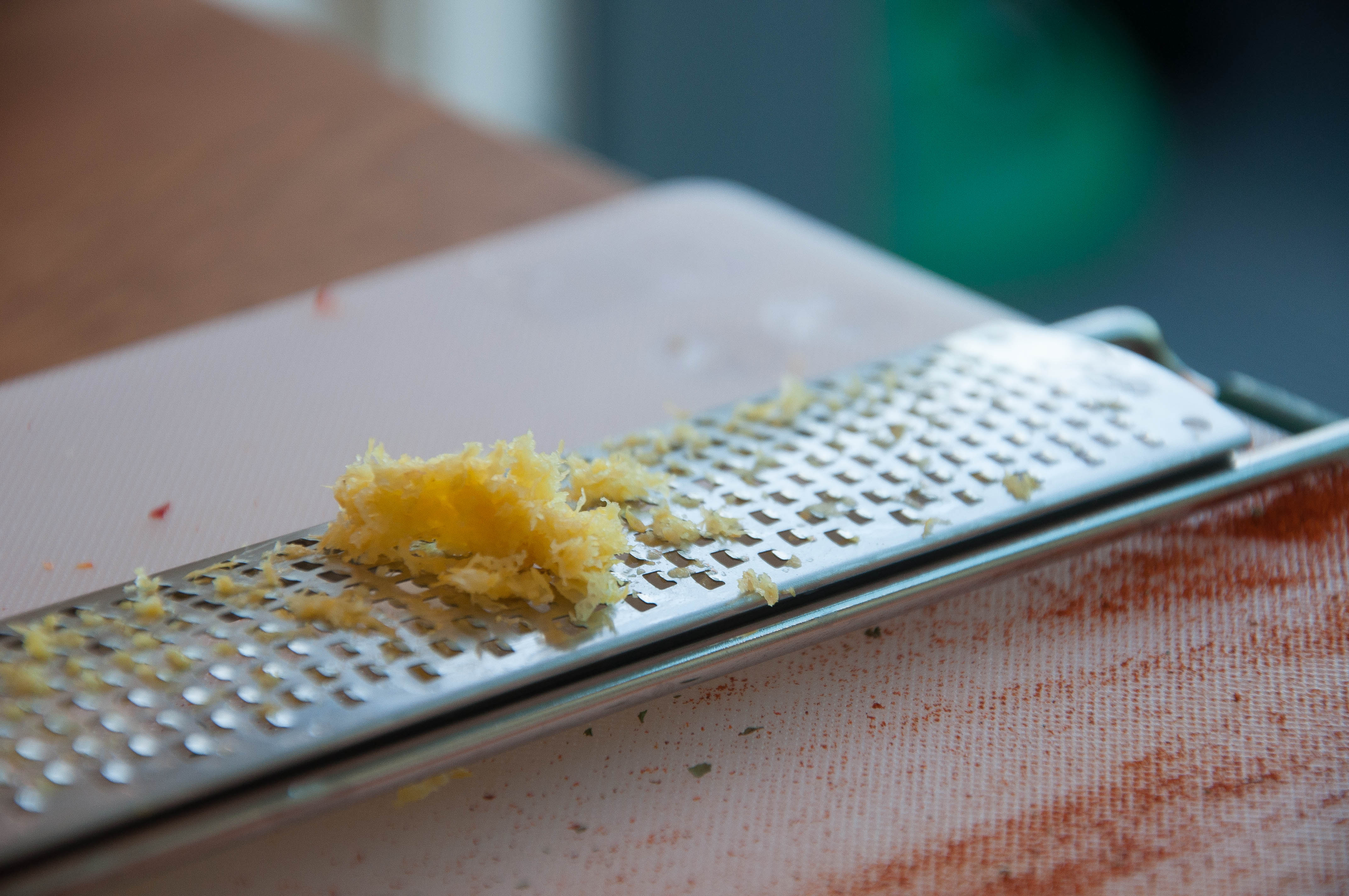
  • 2cm/1in piece of ginger, grated
  • 50ml/2fl oz vegetable oil
  • 25ml/1 fl oz white or red wine vinegar
  • 250ml/5fl Cider
  • 3 tbsp soy sauce
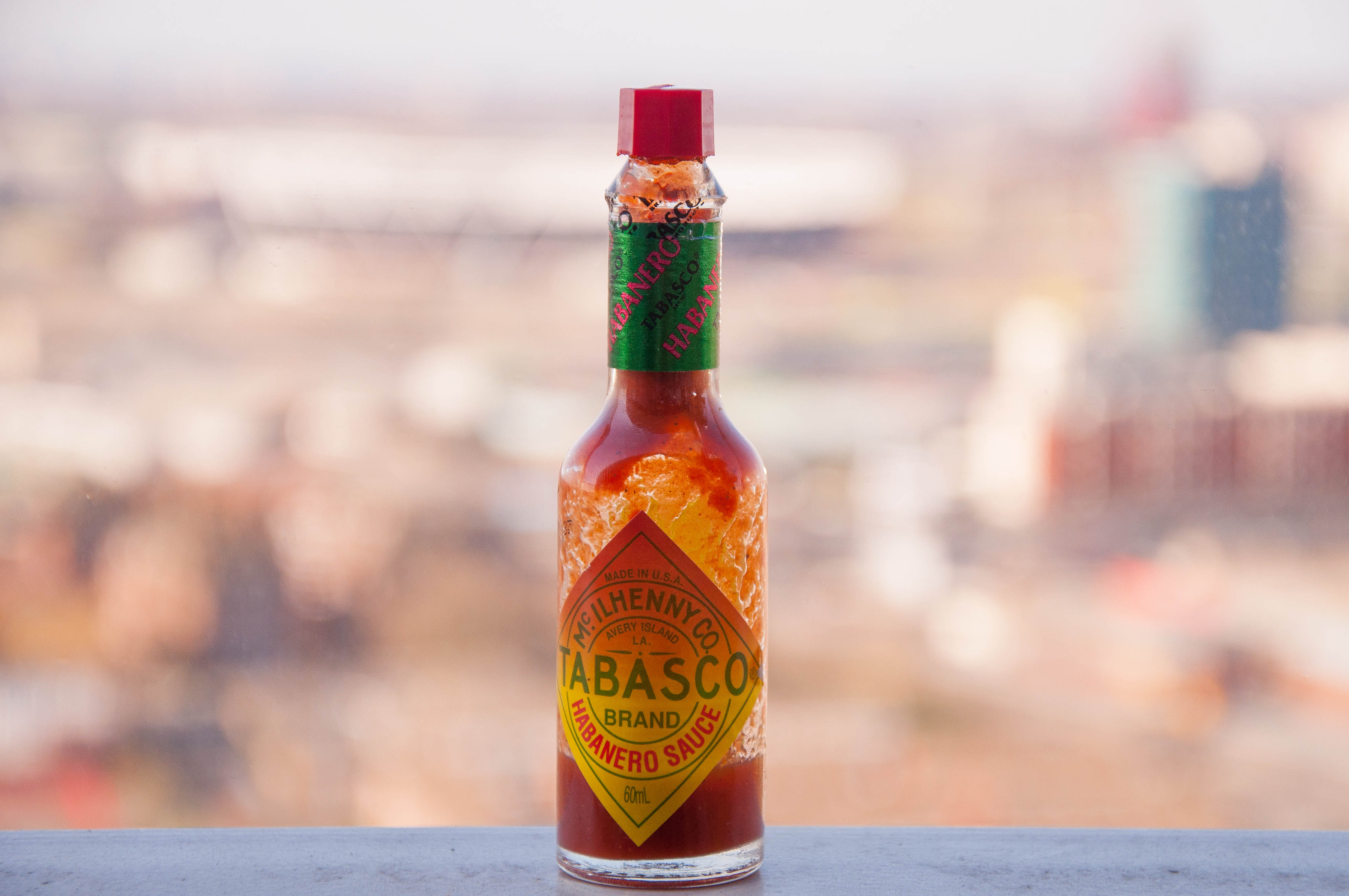
  • 1-2 tbsp hot Tabasco
  • 2 tbsp smoked paprika
  • 1 tbsp chilli powder
  • 3 tsp dried oregano
  • 1 tbsp chopped lemon thyme
  • 1 tsp caster sugar
  • 1 lime, zest and juice

For the spicy rice

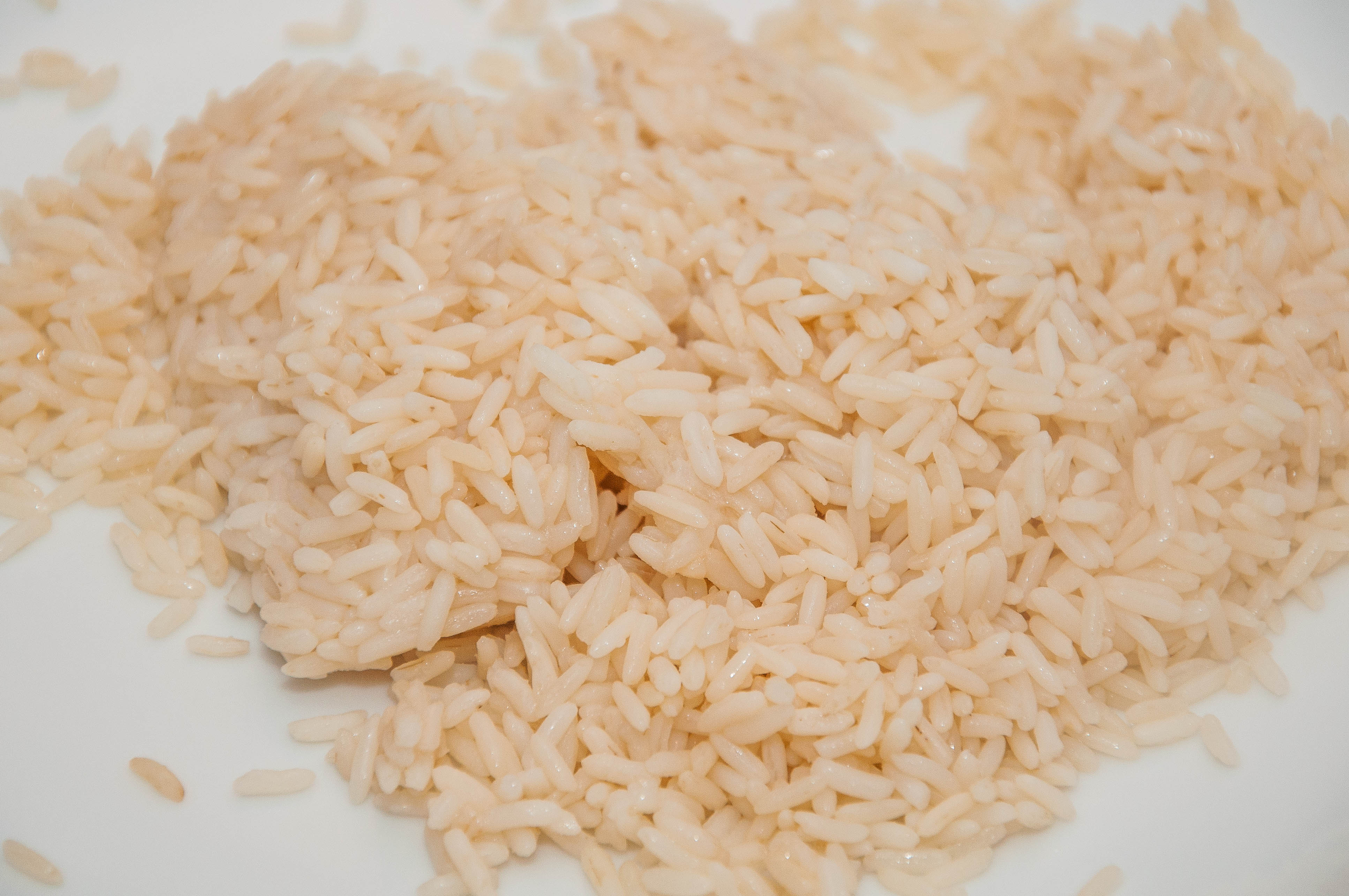
  • 300g of cooked rice
  • 1 green pepper
  • 1 red pepper
  • 1 brown onion
  • 3 sticks celery
  • ½ bunch spring onions
  • a large handful of sugar snap peas
  • 3 tbsp tomato puree
  • 1 tbsp smoked paprika
  • 1 garlic glove

DSC_0355

DSC_0389

Preparation method:

  1. Rub chicken with garlic, oregano, rosemary, salt, sugar, lemon zest, and pepper. Place in a resealable plastic bag. Add thyme, seal bag, and chill at least 12 hours and up to a full day.
  2. To make the piri-piri sauce, preheat the oven to 180C/350F/Gas 4. Place the chillies on a roasting tray and roast them for 10 minutes.
  3. Cool and finely chop the chillies. Heat some oil in a large pan. Place the rest of the ingredients for the sauce in the saucepan, and simmer for 5 minutes.
  4. Allow the mixture to COOL. Very important – unless you’re a fan of E.coli and salmonella bacteria
  5. You can use a large mortar and pestle or a blender to turn the mixture into a more paste like consistency, though its not vital. I didn’t.
  6. Spatchcock the chicken – remove the chicken’s backbone, then break the breast, whilst flattening out the chicken. Spatchcocking the chicken allows it to roast quicker in the oven, at a high temp, and crisp up the skin better. If you’re unsure how to spatchcock a chicken, just use one of the many tutorials available on the web. Add half the piri-piri sauce, spreading it evenly over the chicken. Seal with cling film and marinate in the refrigerator for 2-4 hours.
  7. Preheat the oven to 200C/390F/Gas 6, AND preheat a large griddle or sauce pan on the hob.
  8. Season the marinated chicken, and cook it on the pan for 2-3 minutes on each side, until the skin is golden brown.
  9. Transfer the browned chicken to a roasting tray with a rack. Pour the cider and red wine into the bottom of the roasting tray. Peel and quarter the red onions, then scatter in the roasting tray. Cover in foil and roast in the oven for 20 minutes.
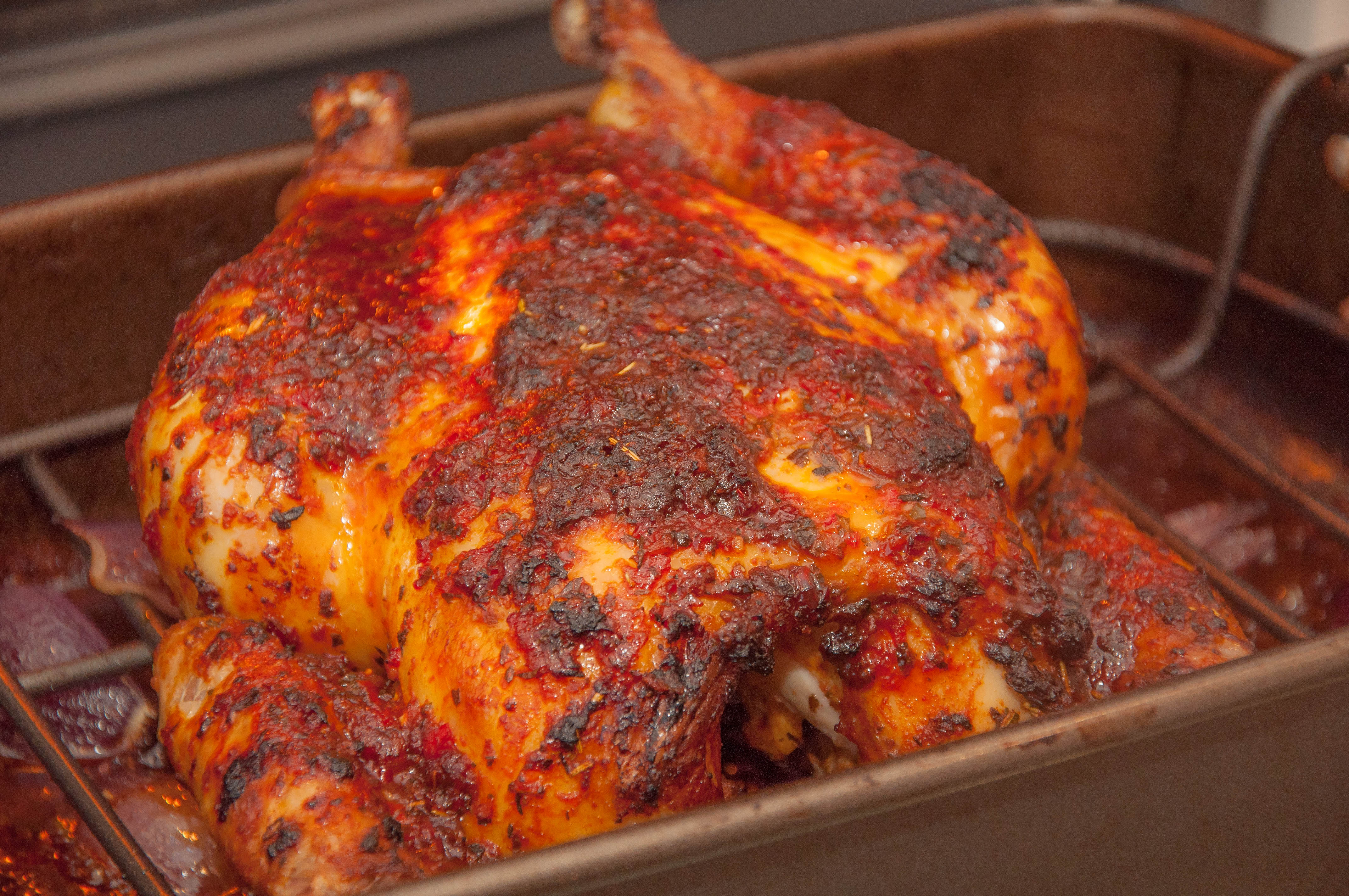
  10. After twenty minutes remove foil, scatter a tbsp of caster sugar over the top of the chicken and increase temp to 250 for around 10 minutes to crisp up the skin, until an instant-read thermometer inserted into the thickest part of thigh registers 165°F / 72C° and the juices run clear.
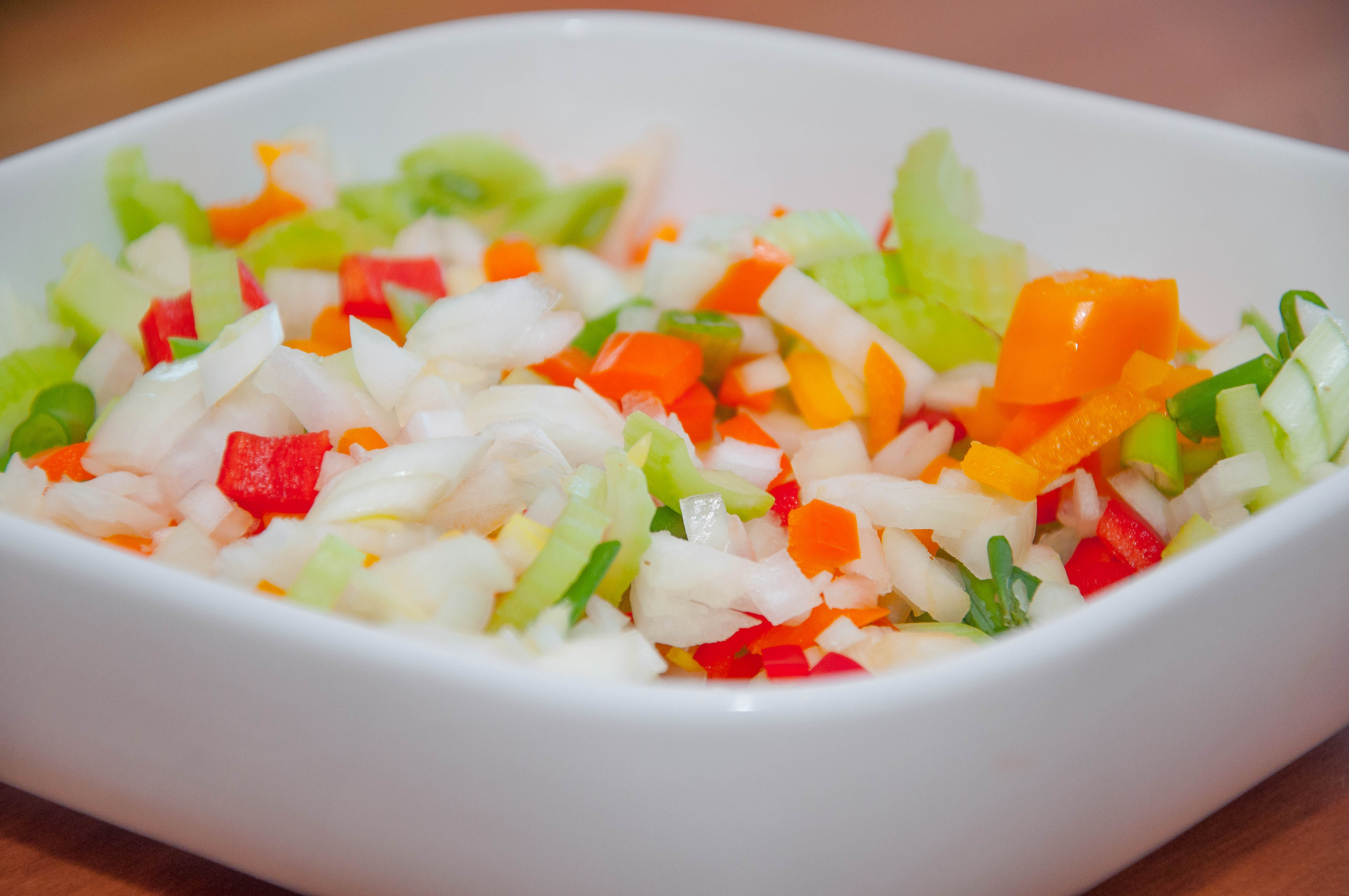
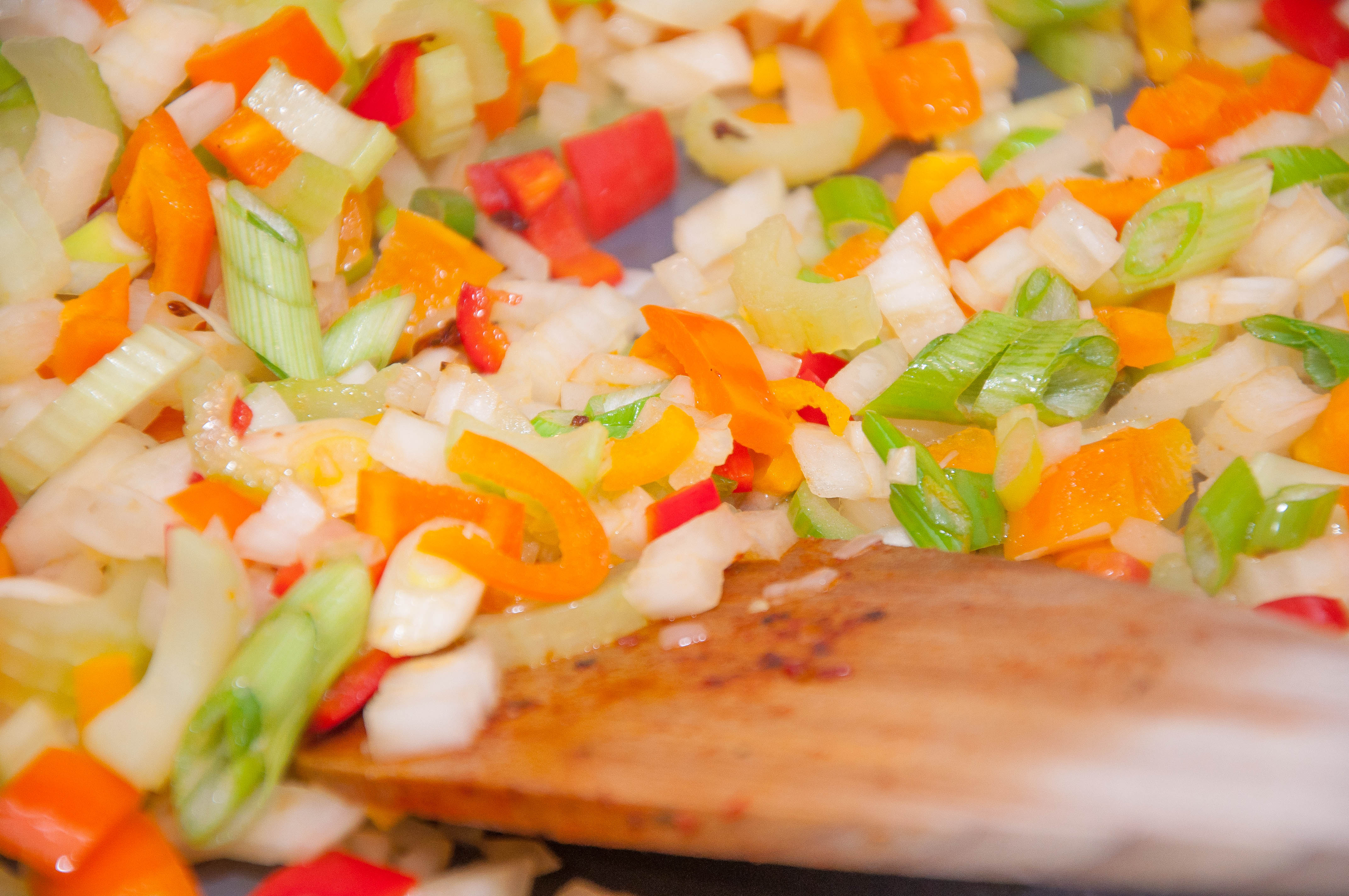
  11. For the rice – heat a little oil in a large frying pan. Fry the onions until browned. Cook the peppers, celery and white parts of the spring onions for 5 mins. Finely slice and chop the garlic and ginger then add to the pan.
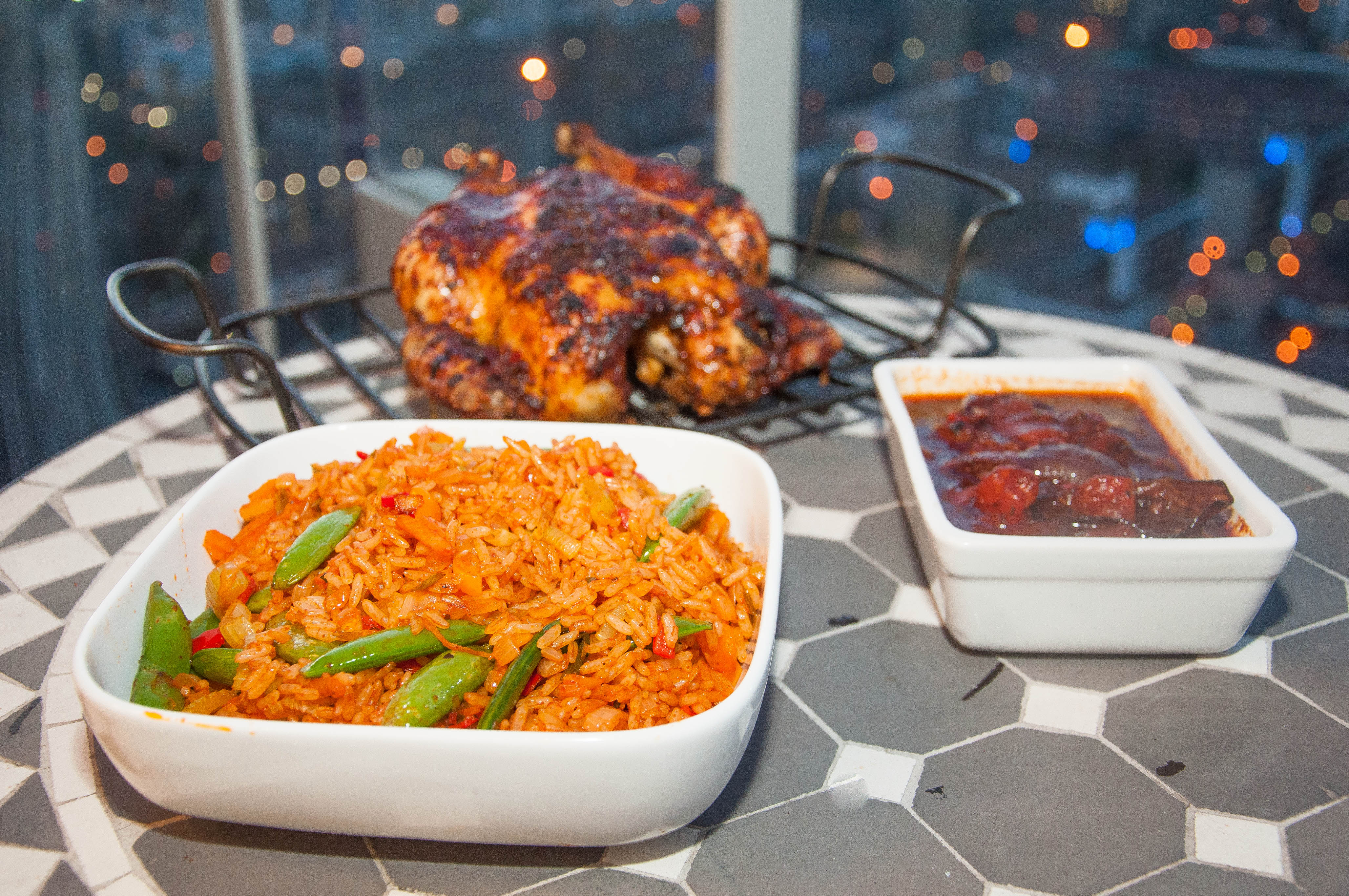
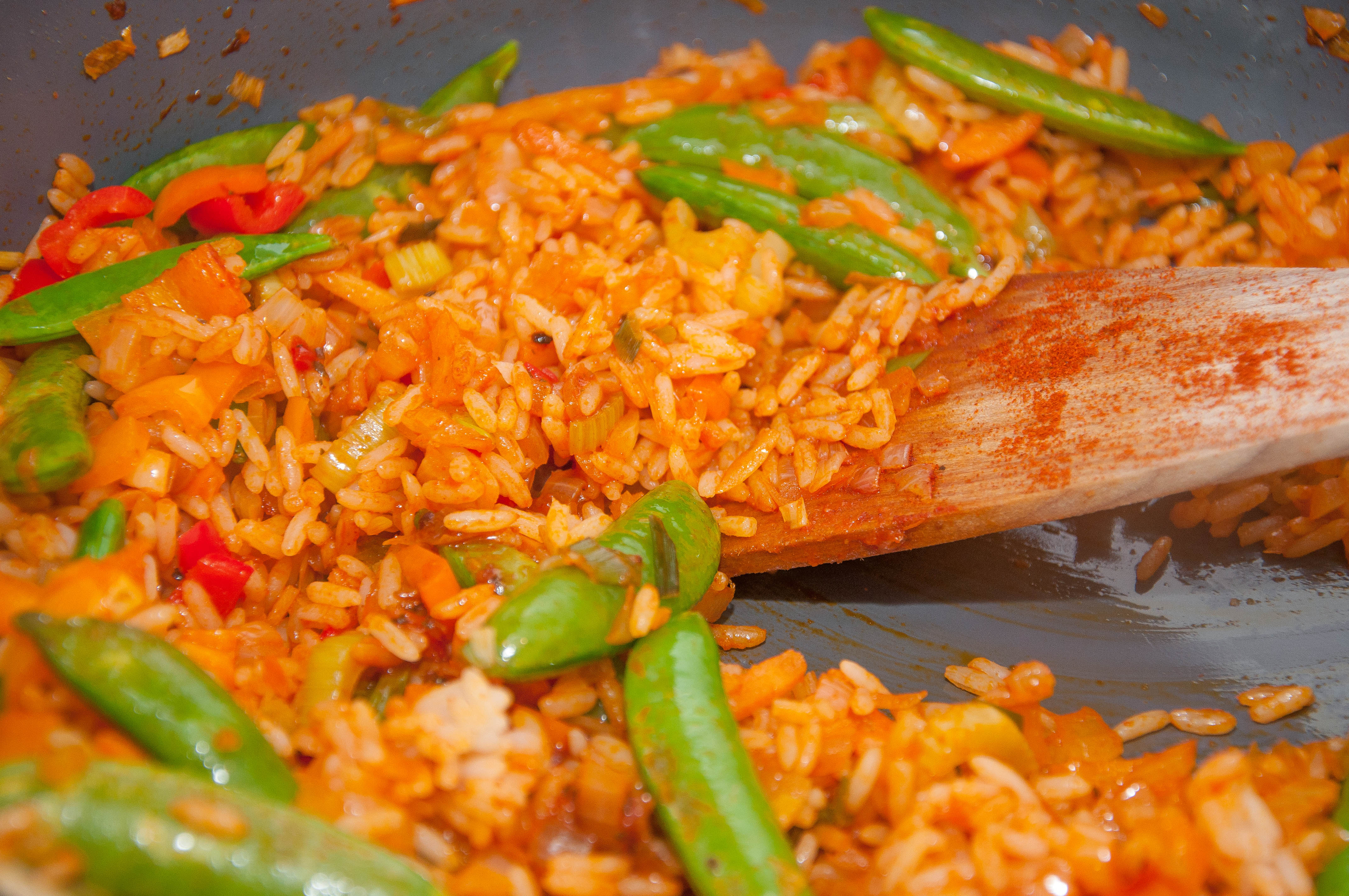
  12. Tip in the purée and paprika, stir, then add the cooked rice, breaking up with a wooden spoon so all the grains are coated well. Use a high heat and scrape any that sticks off the bottom so you get some soft and some crispy parts. Heat until piping hot. At the last moment add the sugar snap peas and cook everything, stirring regularly, for around 3 minutes.
  13. Scatter the green parts of the spring onion on top and set aside briefly.
  14. Back to the chicken – Once cooked, carefully lift the chicken from the roasting tin onto a plate and cover it loosely with foil so it can rest and become juicier.
  15. Now to make some more Piri Piri sauce to serve with the chicken. Carefully pour the oil out from the roasting tin, leaving the juice and sticky bits behind. Put it on a medium heat and add the onions, the rest of the prepared sauce mixture, some chopped tomatoes and the cider, stock and red wine. Allow to simmer and reduce for a some minutes, scraping up all the sticky bits from the bottom.
  16. Returning to the chicken, pour any juices on the plate into the sauce before carving the meat. Arrange on serving plates with the roasted Piri Piri sauce and a helping of the spicy rice.

MUSIC I COOKED TO:
DSC_0257DSC_0083DSC_0088DSC_0092DSC_0111DSC_0100DSC_0129DSC_0134DSC_0140DSC_0151DSC_0157DSC_0169DSC_0175DSC_0176DSC_0191DSC_0181DSC_0201DSC_0202DSC_0211DSC_0330DSC_0271